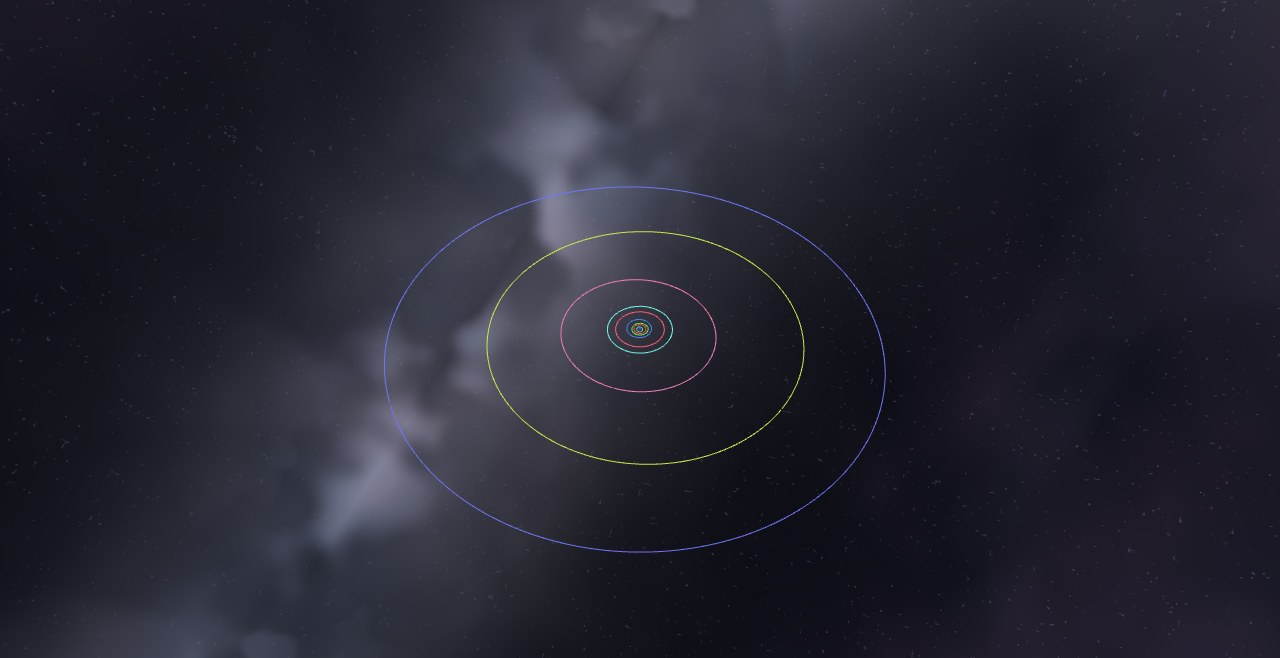
Twin Jupiters
What if our Solar System possessed two giant Jupiters at 3 AU and 4 AU? Test the extreme gravitational perturbations and orbital disruptions inflicted on the terrestrial planets in 3D.
3D Space and Gravity Simulator. Simulate the solar system, exoplanets and even colliding galaxies. Add, delete and modify planets, and change the laws of physics.
Share
What if our Solar System possessed two giant Jupiters at 3 AU and 4 AU? Test the extreme gravitational perturbations and orbital disruptions inflicted on the terrestrial planets in 3D.
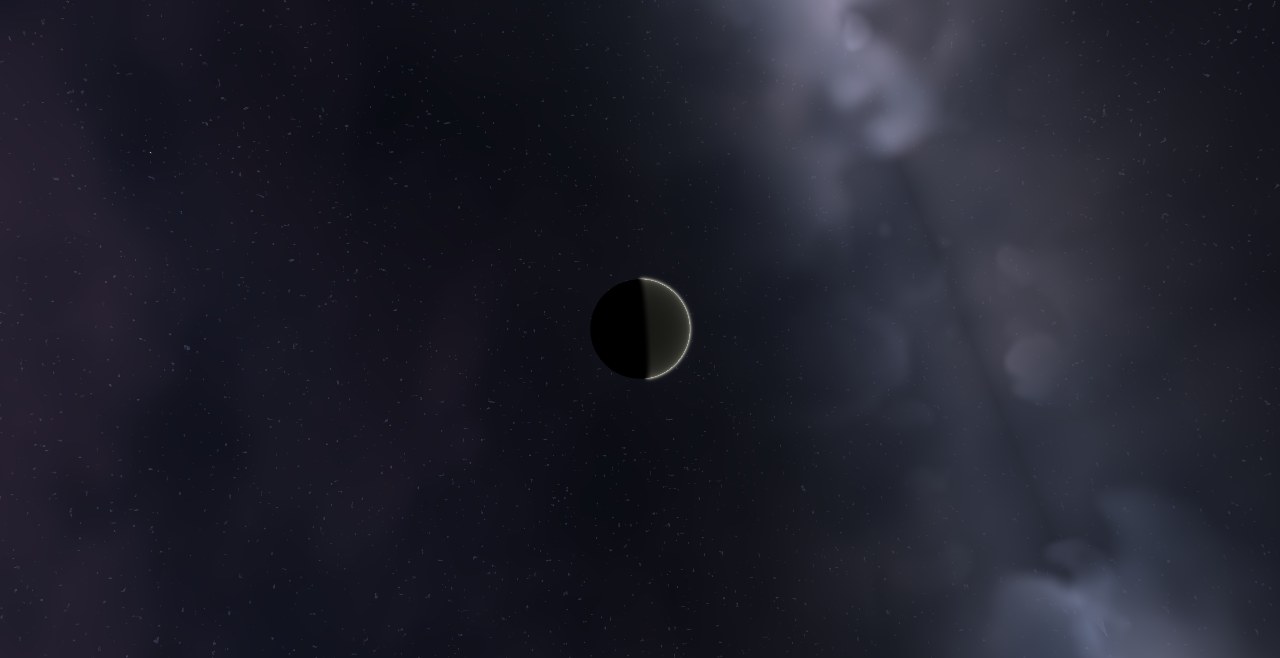
UCAC3 113-933, a cool M-dwarf of 0.61 solar masses, and UCAC3 113-933 b, a 21.0-Jupiter-mass companion, at 6,100 AU from its star.
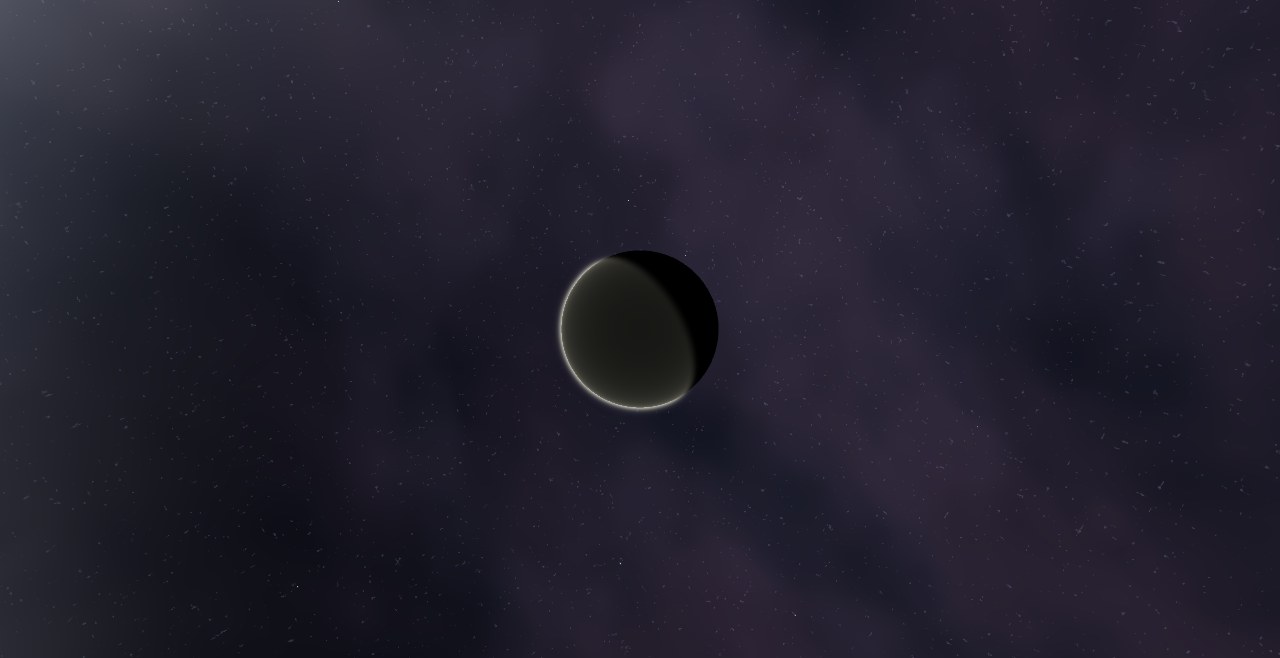
UCAC4 328-061594, a Sun-like G-type star of 1.19 solar masses, and UCAC4 328-061594 b, a 21.0-Jupiter-mass companion, at 19,000 AU from its star.
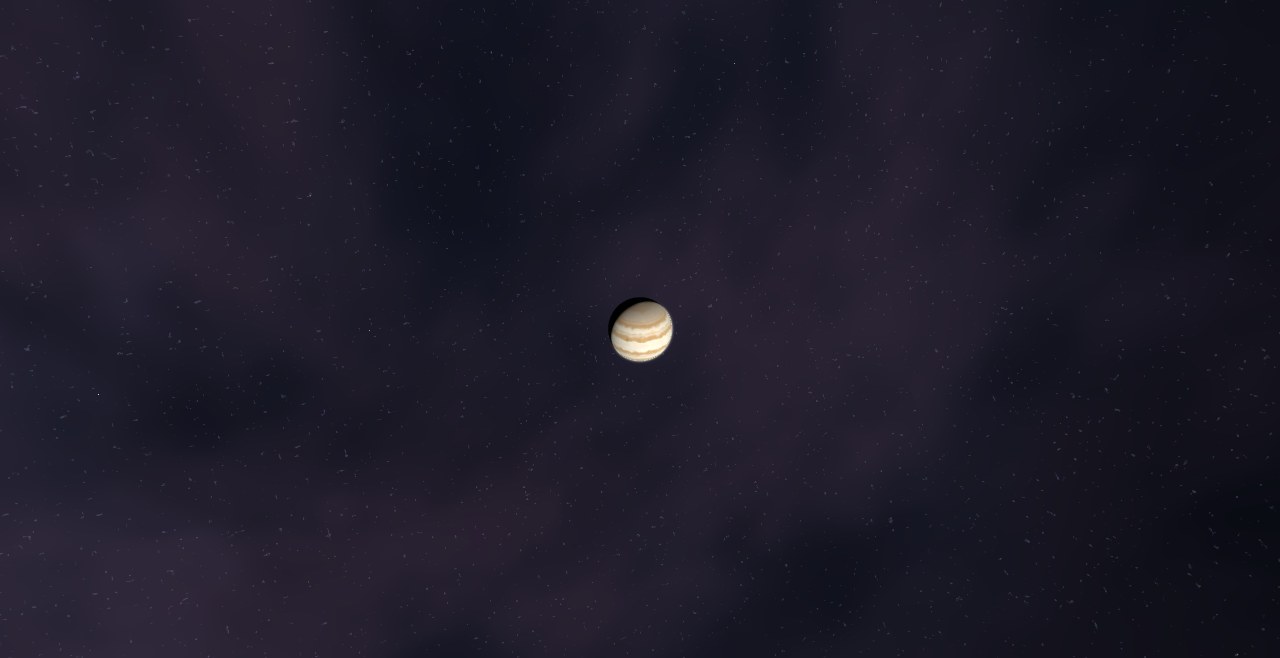
UKIRT-2017-BLG-001L, a Sun-like G-type star of 0.81 solar masses, and UKIRT-2017-BLG-001L b, a 1.28-Jupiter-mass companion, at 4.180 AU from its star.
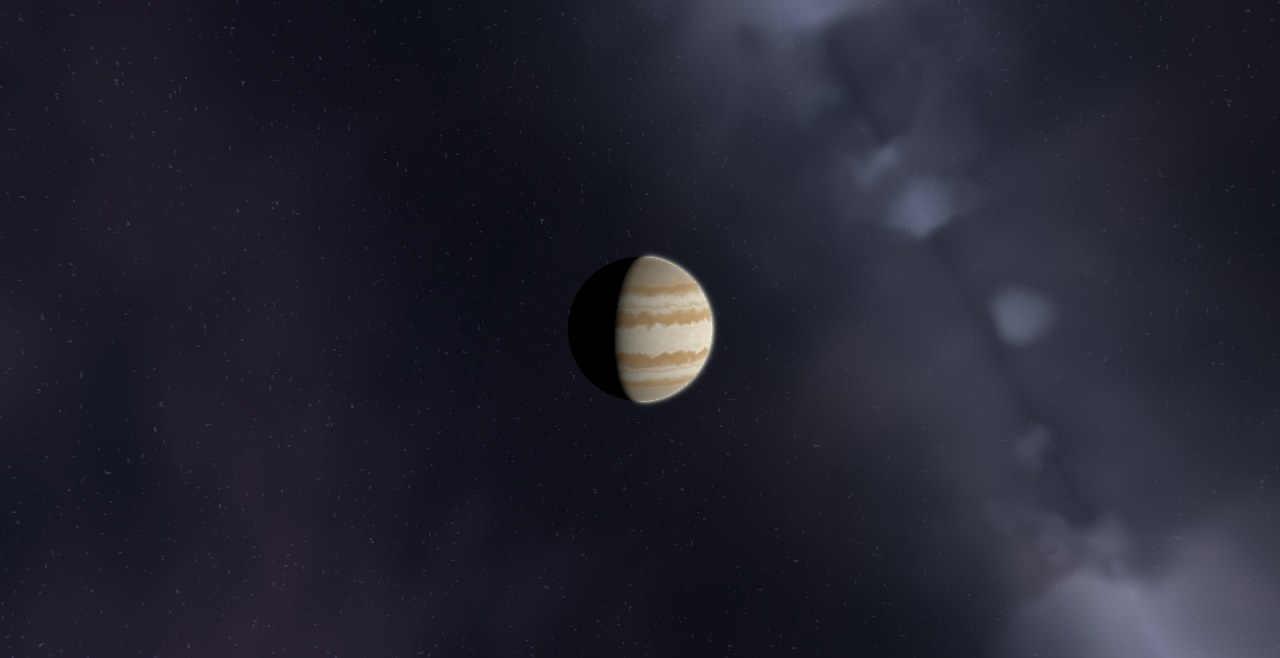
USco CTIO 108, a cool M-dwarf of 0.06 solar masses, and USco CTIO 108 b, a 14.0-Jupiter-mass companion, at 670 AU from its star.
USco1556 A, a cool M-dwarf of 0.33 solar masses, and USco1556 b, a 15.0-Jupiter-mass companion, at 3,500 AU from its star, and an equilibrium temperature near 2,240 K.
USco1621 A, a cool M-dwarf of 0.36 solar masses, and USco1621 b, a 16.0-Jupiter-mass companion, at 2,880 AU from its star, and an equilibrium temperature near 2,270 K.
UZ For, a Sun-like G-type star of 0.70 solar masses, and UZ For c, a 7.70-Jupiter-mass companion, with an orbital period of 5.25 years, at 2.800 AU from its star.
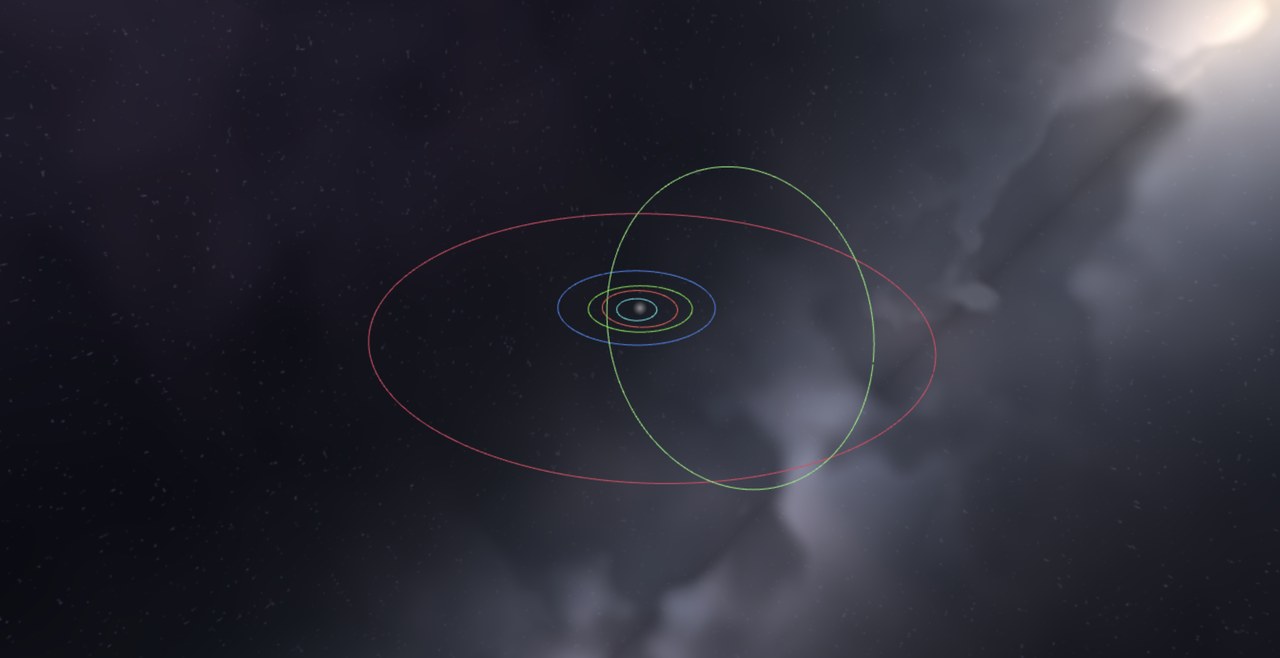
Follow the Ulysses spacecraft as a powerful Jupiter gravity assist cranks its trajectory into an unprecedented 76-degree polar orbit to explore the uncharted poles of the Sun.
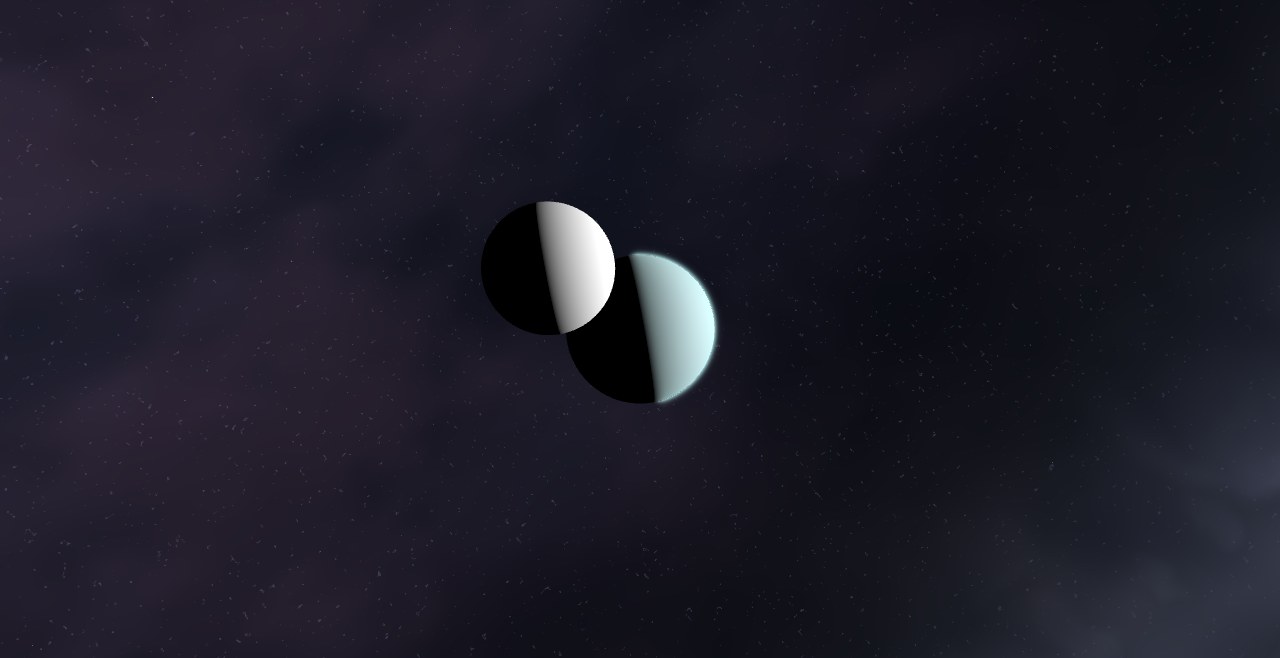
Explore Uranus and its ring-moon system, tilted 98 degrees on its side. Watch Miranda, Ariel, Titania, Oberon, and shepherd moons orbit in the planet's extreme equatorial plane.
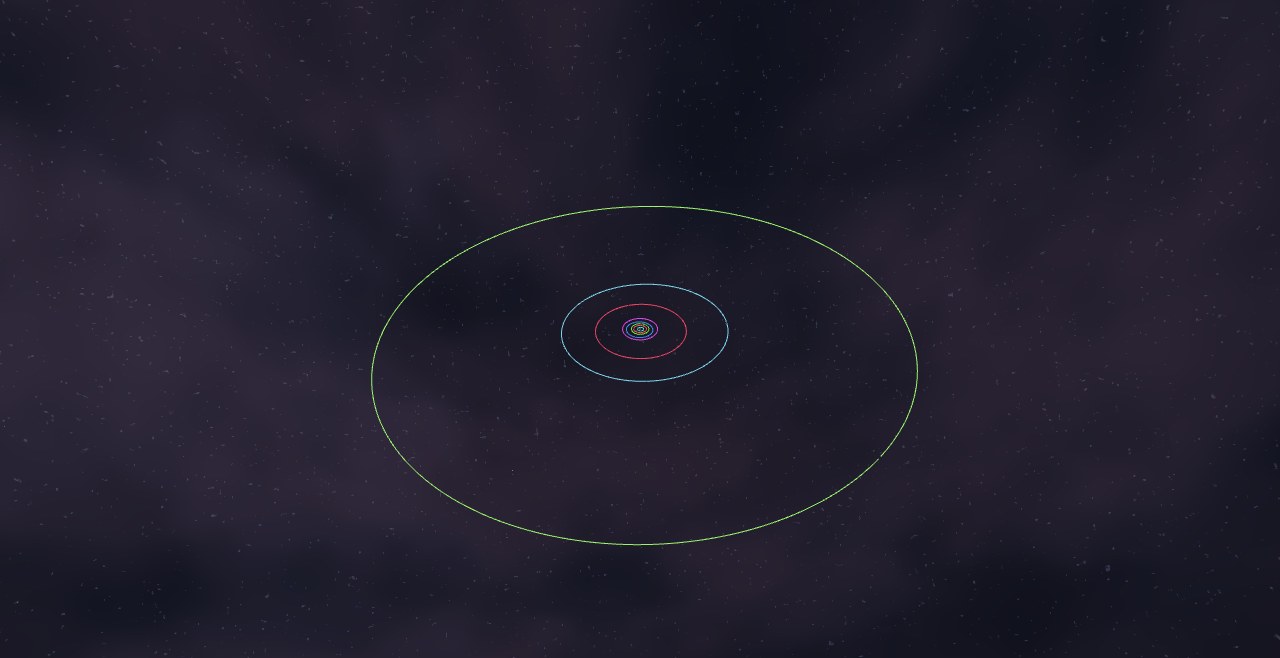
What if Uranus orbited at 2 AU right in the heart of the asteroid belt? Explore the disruptive orbital chaos as an ice giant dominates the region between Mars and Jupiter in 3D.
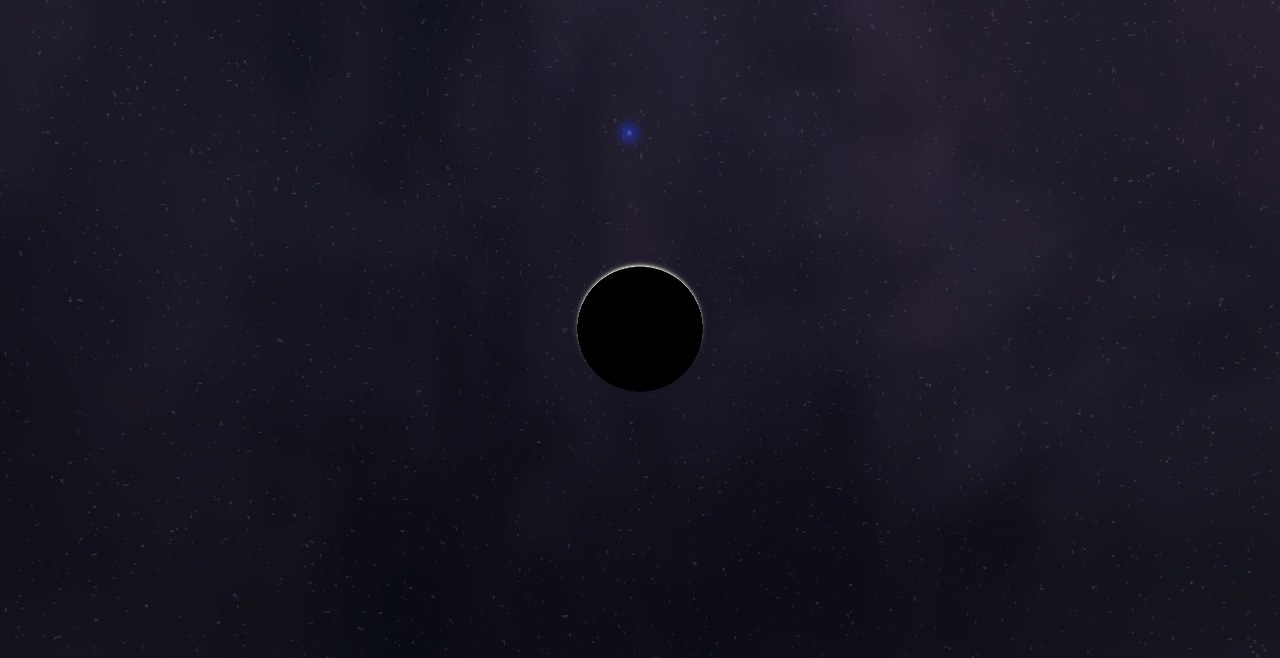
V0391 Peg, and V0391 Peg b, a 3.20-Jupiter-mass companion, with an orbital period of 3.20 years, at 1.700 AU from its star.
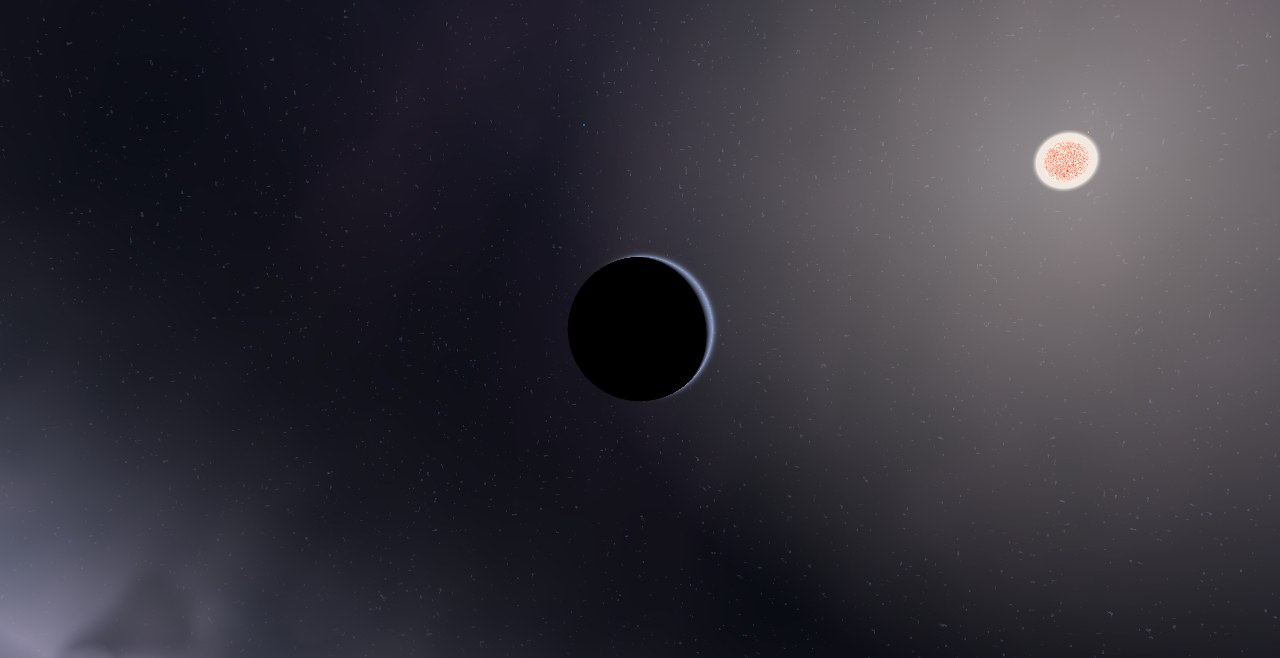
V1298 Tau, a 20-million-year-old star with four transiting planets. They are still contracting and look far puffier than mature planets. The star is a young K dwarf in Taurus.
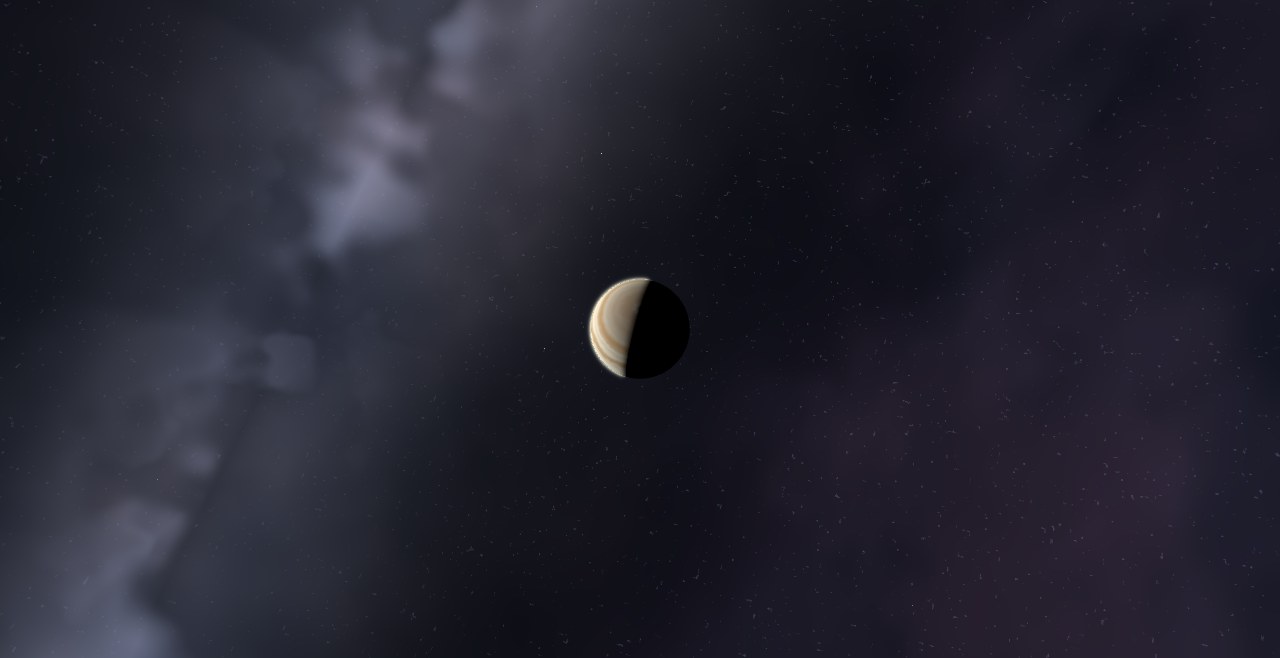
V2376 Ori, a cool M-dwarf of 0.45 solar masses, and V2376 Ori b, a 20.0-Jupiter-mass companion, at 71.0 AU from its star, and an equilibrium temperature near 2,100 K.
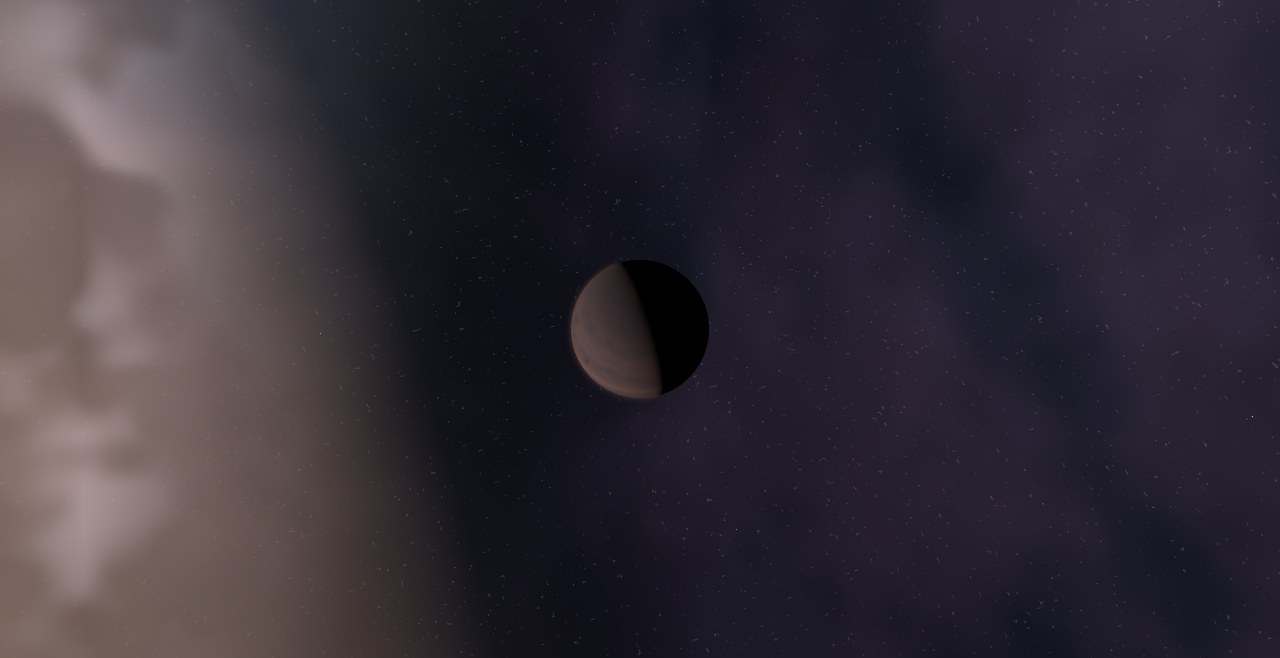
V830 Tau, an orange K-type dwarf of 1.00 solar masses, and V830 Tau b, a 0.70-Jupiter-mass companion, with an orbital period of 4.9 days, at 0.057 AU from its star.
VHS J125601.92-125723.9, a cool M-dwarf of 0.07 solar masses, and VHS J125601.92-125723.9 b, a 16.0-Jupiter-mass companion, with an orbital period of 15,880 years, at 350 AU from its star, and an equilibrium.
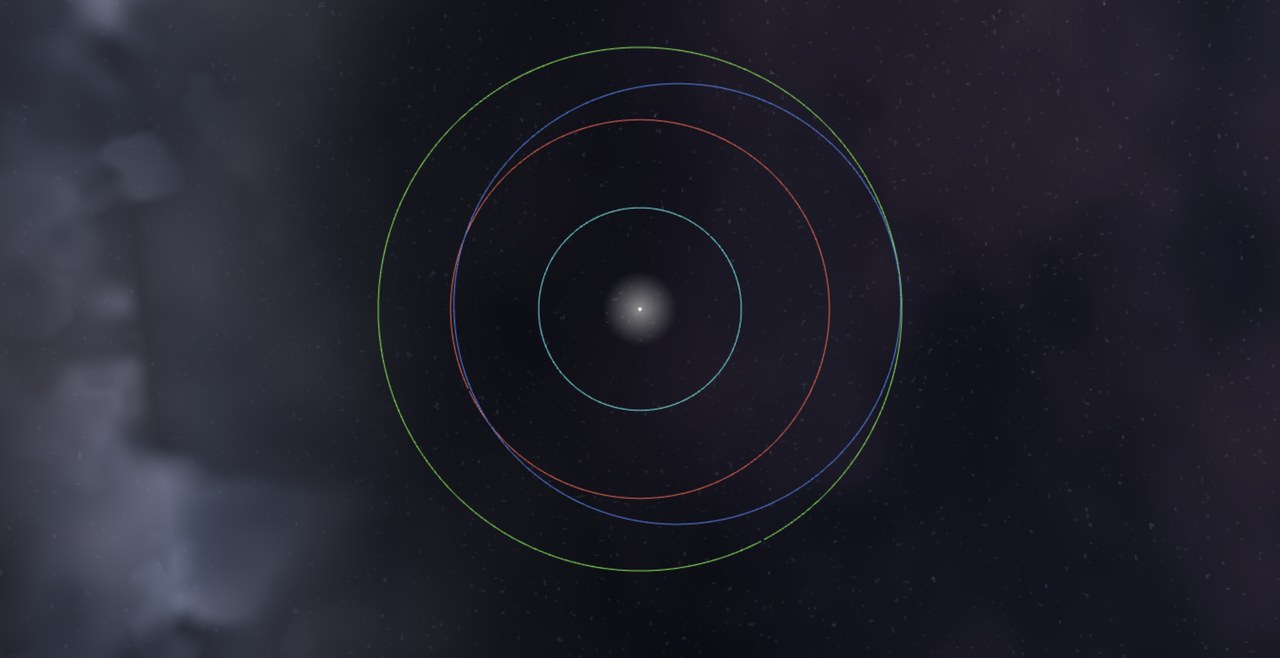
Track ESA's Venus Express on its 153-day interplanetary transit from Earth to Venus. Follow the sunward Hohmann-style transfer trajectory using real orbital mechanics in 3D.
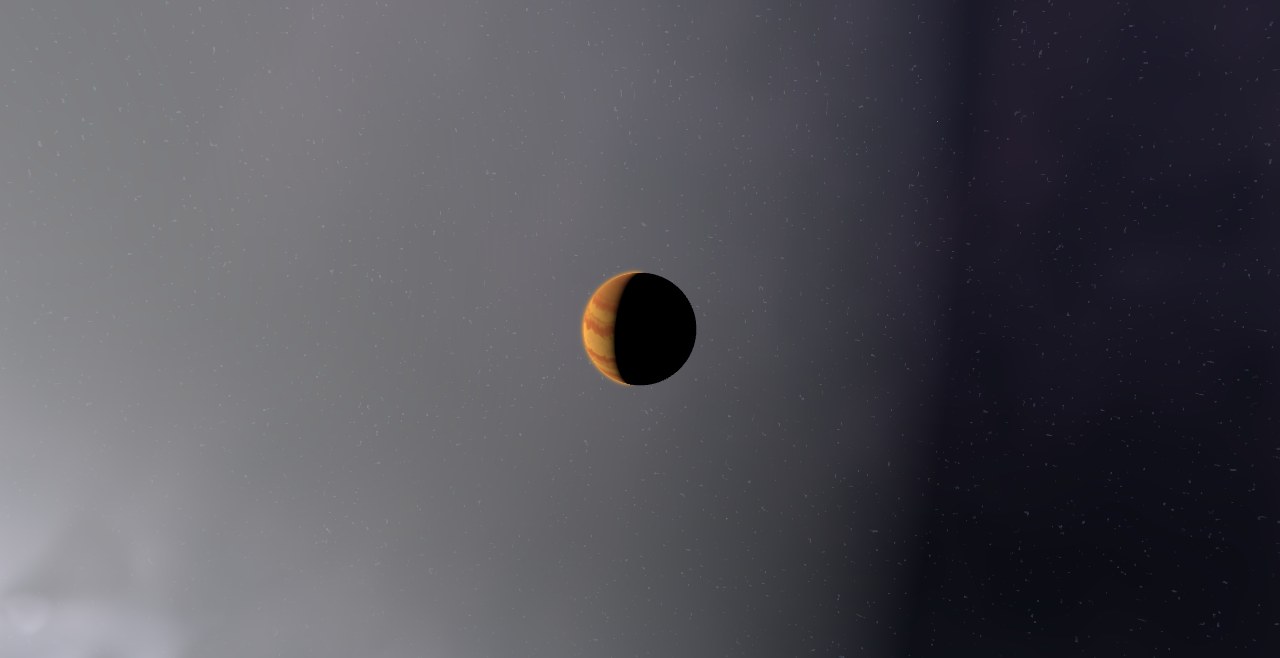
WASP-1, a Sun-like F-type star of 1.24 solar masses, and WASP-1 b, a 0.85-Jupiter-mass companion, with an orbital period of 2.5 days, at 0.039 AU from its star.