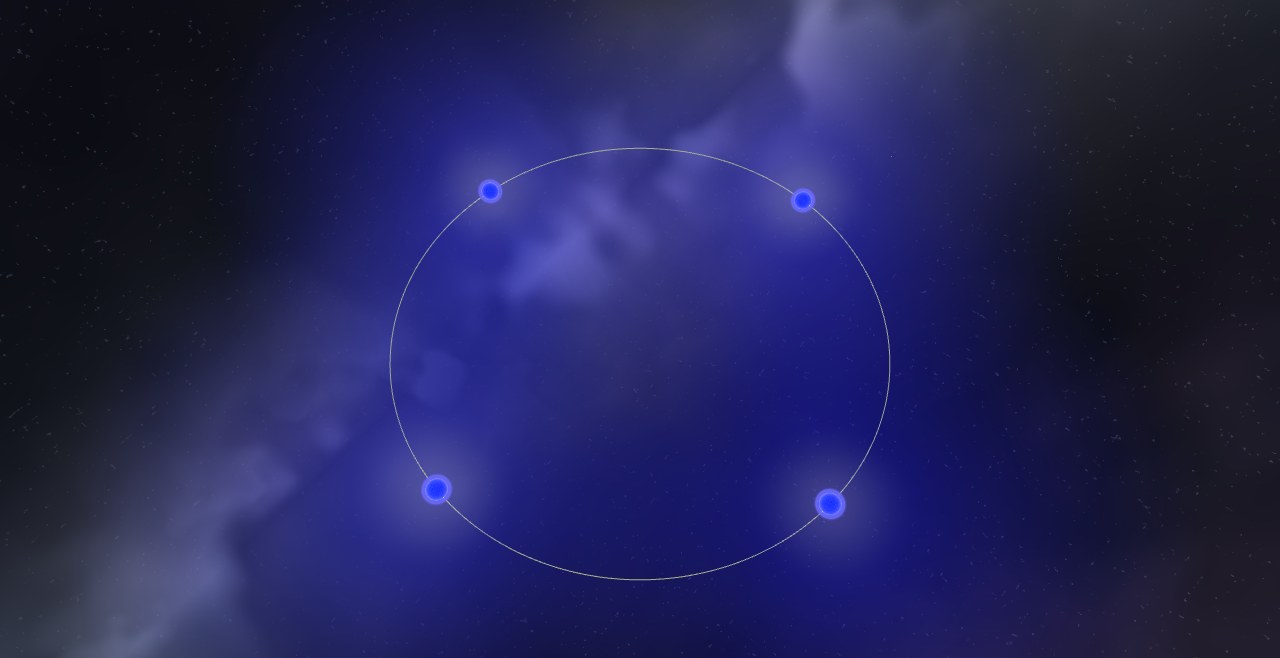
Dancing in a Circle
Experience an astonishing four-body choreography where four equal masses chase one another along a single circular loop, perfectly stabilized by pure Newtonian gravity.
Scenarios
Watch mathematics turn into art with mesmerizing orbital choreographies. These scenarios demonstrate perfectly balanced, periodic multi-body systems where equal masses chase each other on shared geometric paths without flying apart.
Share
Experience an astonishing four-body choreography where four equal masses chase one another along a single circular loop, perfectly stabilized by pure Newtonian gravity.
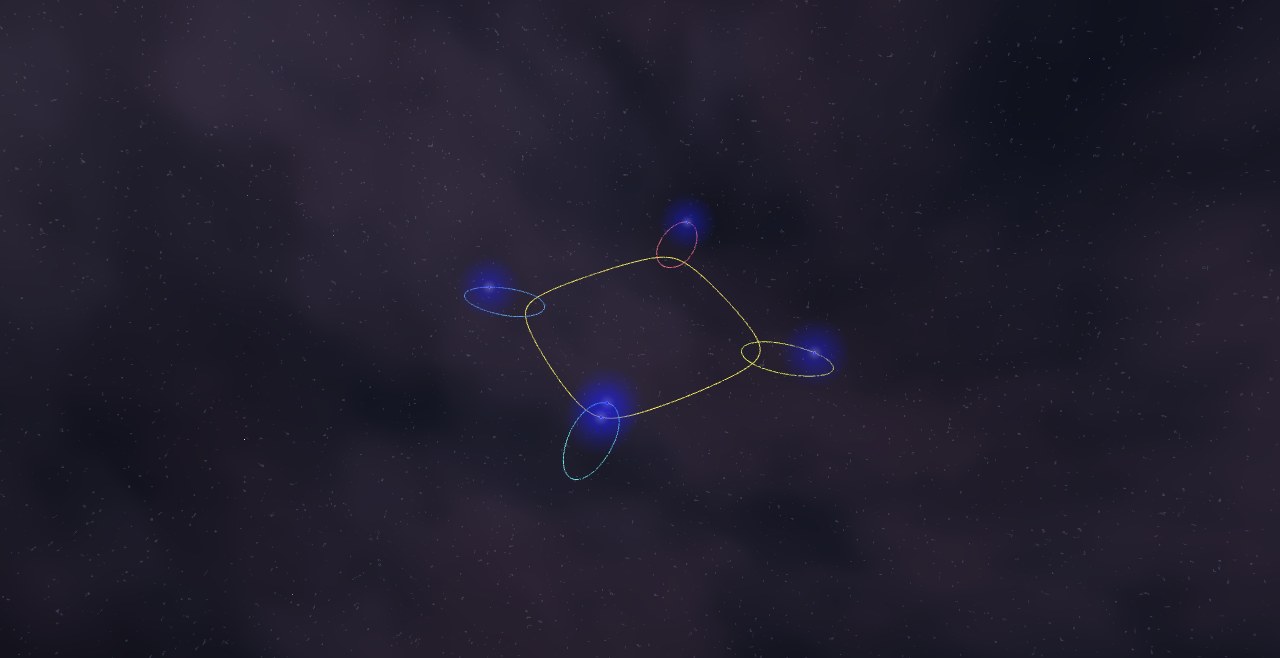
Discover the Four Corners choreography: four masses trace synchronized elliptical loops at the vertices of a square while a central fifth body anchors the periodic balance.
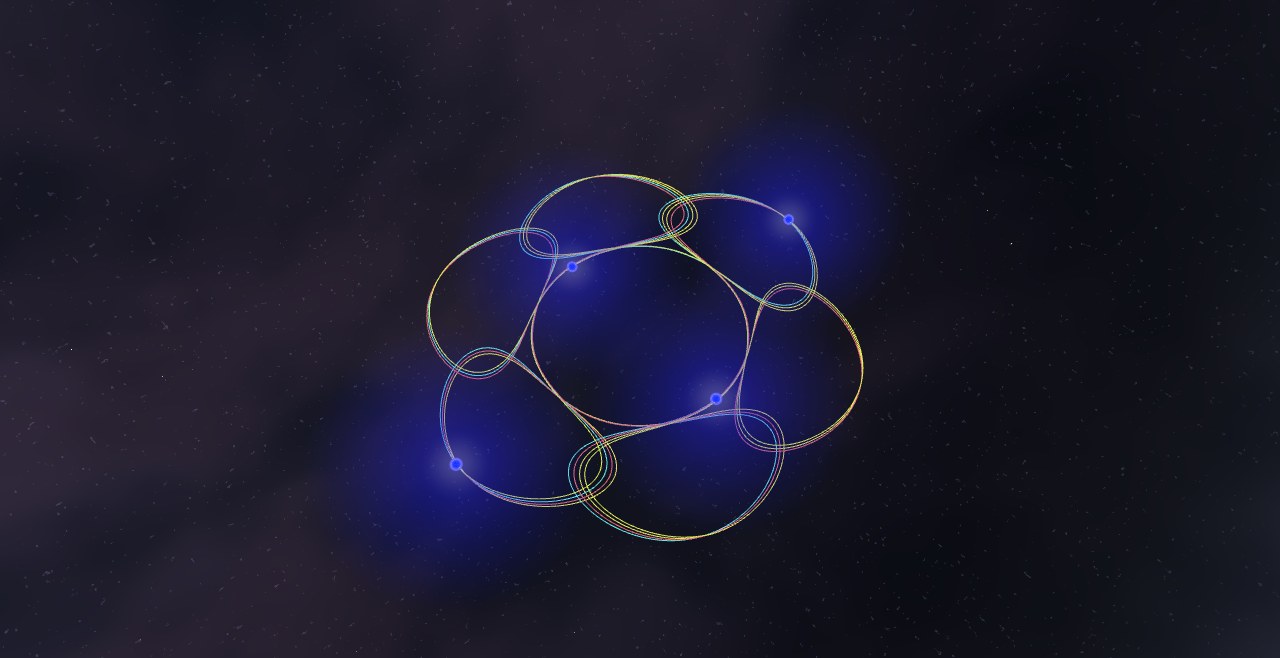
Watch four equal masses weave a mesmerizing hexagonal trajectory. Mutual Newtonian gravity alone preserves this delicate, periodic six-fold choreography indefinitely.
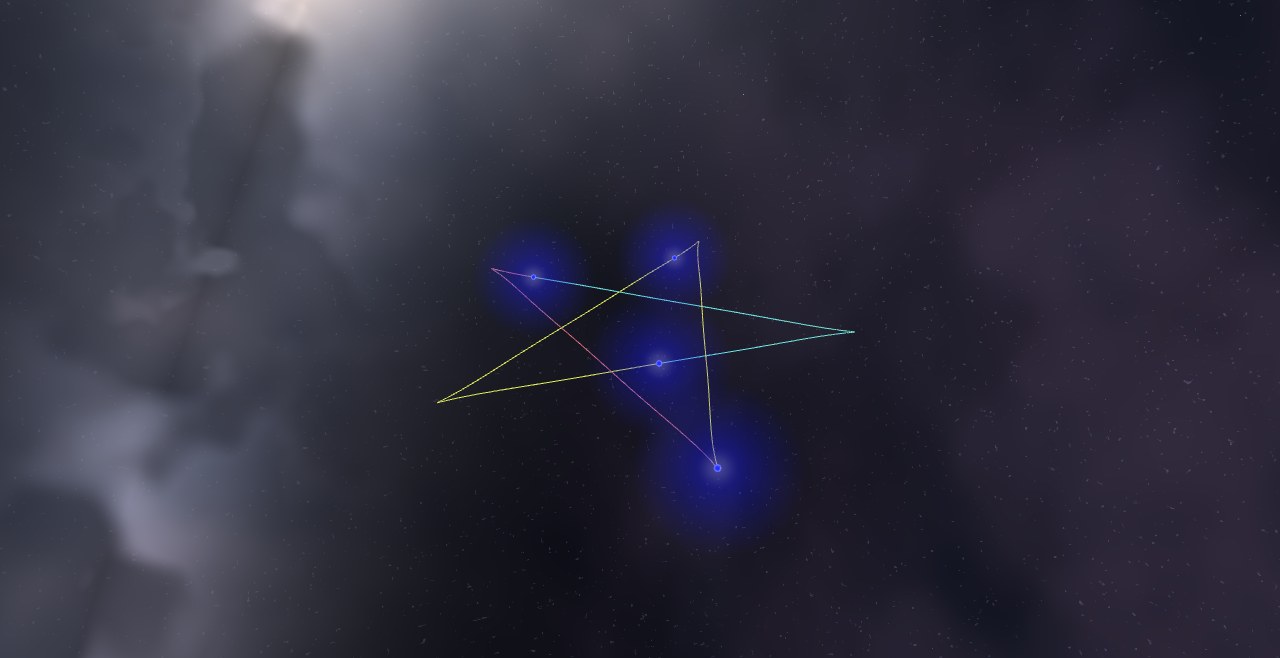
Simulate a periodic five-body choreography where equal masses trace an intricate five-pointed star, cycling through a repeating geometric orbit governed by mutual gravity.
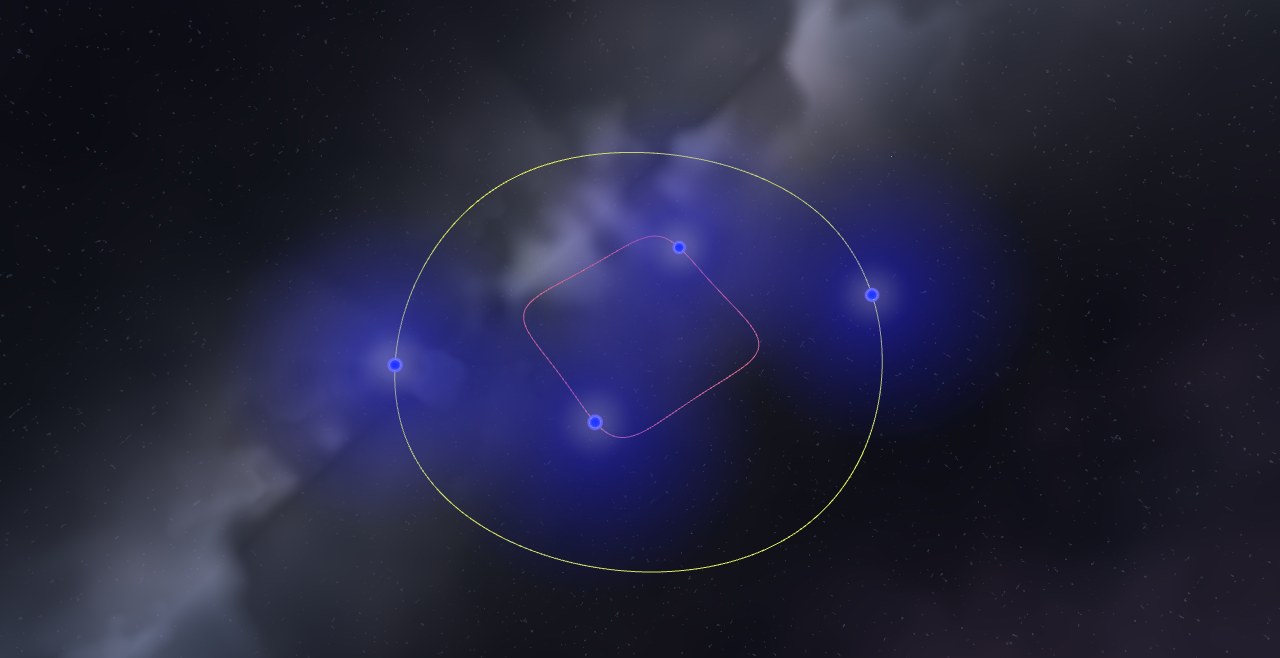
Observe four equal masses tracing a rotating square nested within a circle. Without any central anchor, mutual gravitational attraction creates a hypnotic periodic dance.
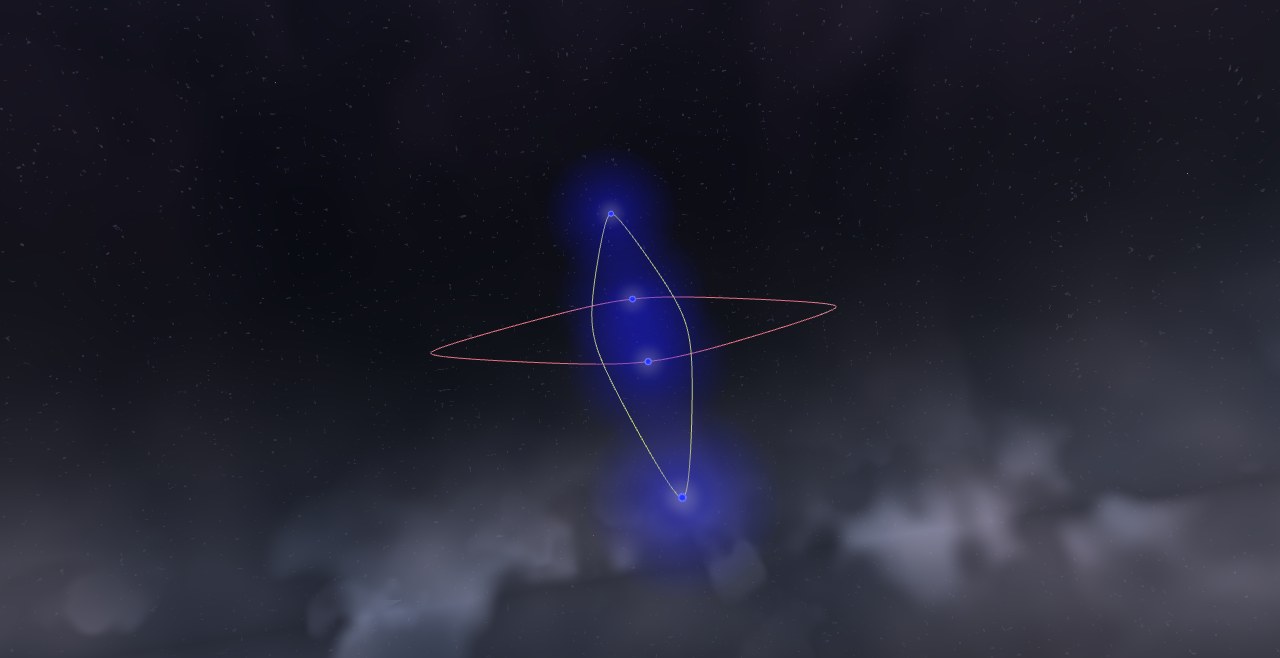
Explore the All Seeing Eye, an extraordinary four-body choreography whose overlapping trajectories carve an almond-shaped eye with a central focus without any central mass.
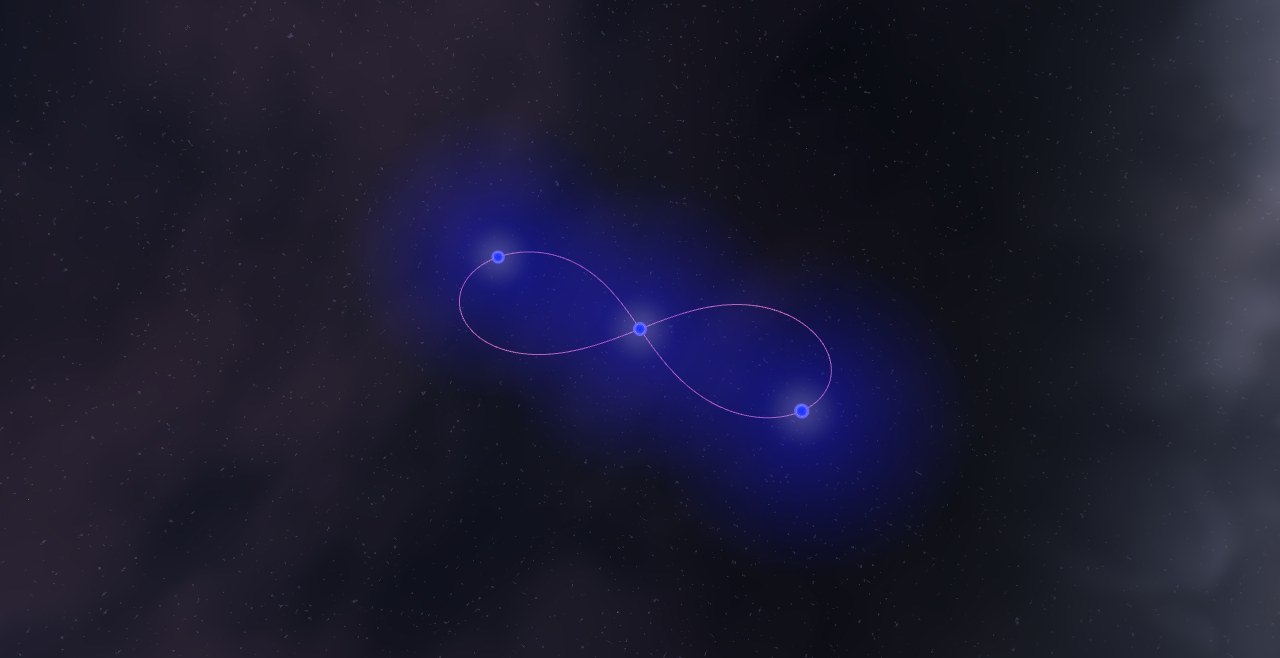
Witness the famous Chenciner–Montgomery figure-eight solution: three equal masses endlessly chasing one another along a three-lobed path in periodic gravitational equilibrium.
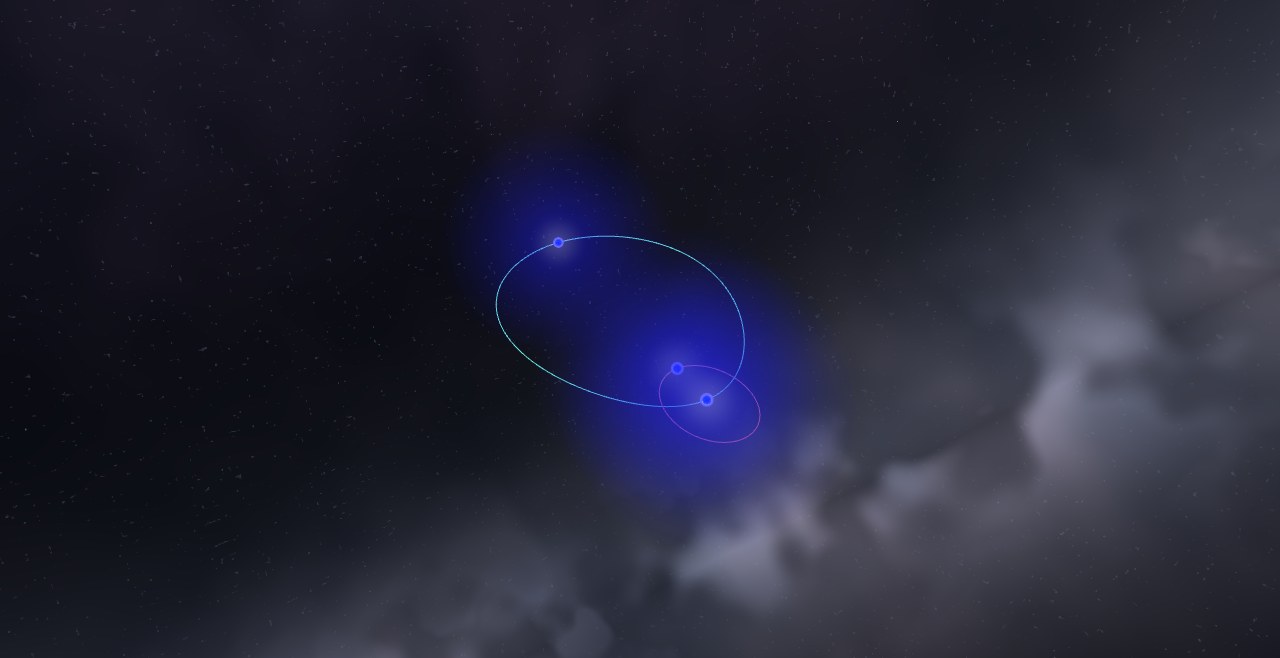
Trace the Sleeping Snowman choreography: three equal masses smoothly follow stacked loops that trace a reclining snowman figure in an eternal, periodic gravitational dance.
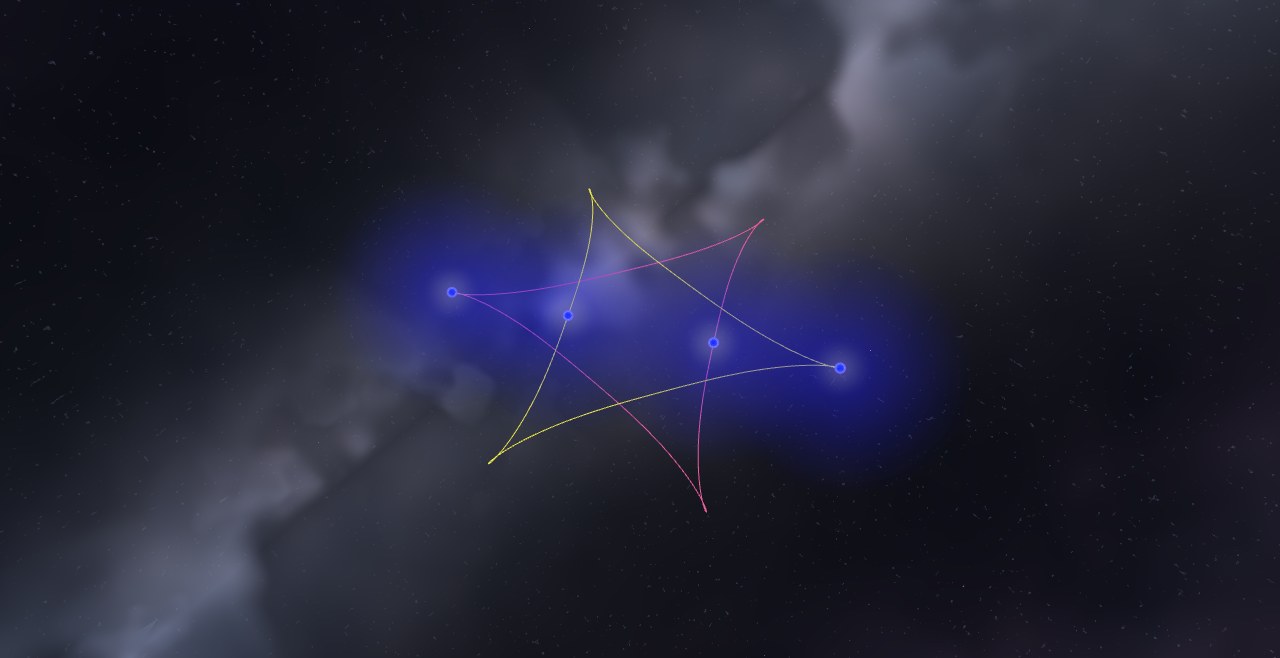
Simulate the Star of David n-body choreography: six equal masses follow interleaved triangular paths, forming a six-pointed stellar pattern in periodic gravitational balance.
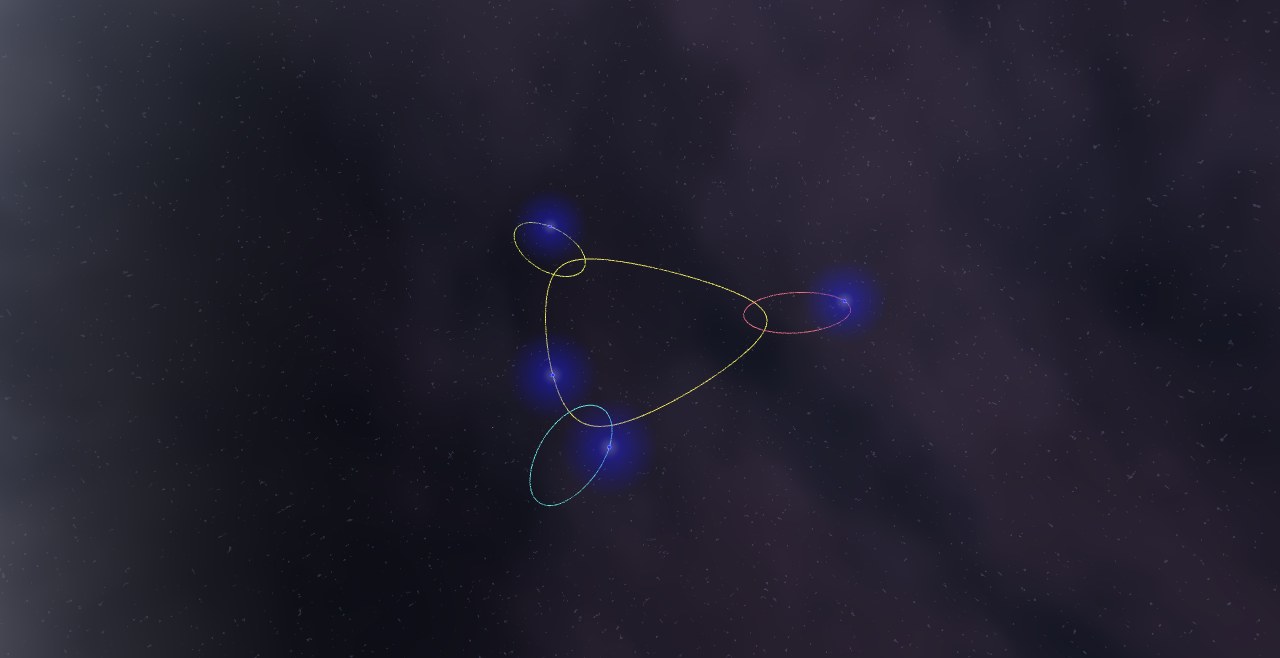
Watch a four-body choreography where three masses execute small synchronized loops at the corners of a triangle while a fourth mass orchestrates the periodic orbital balance.
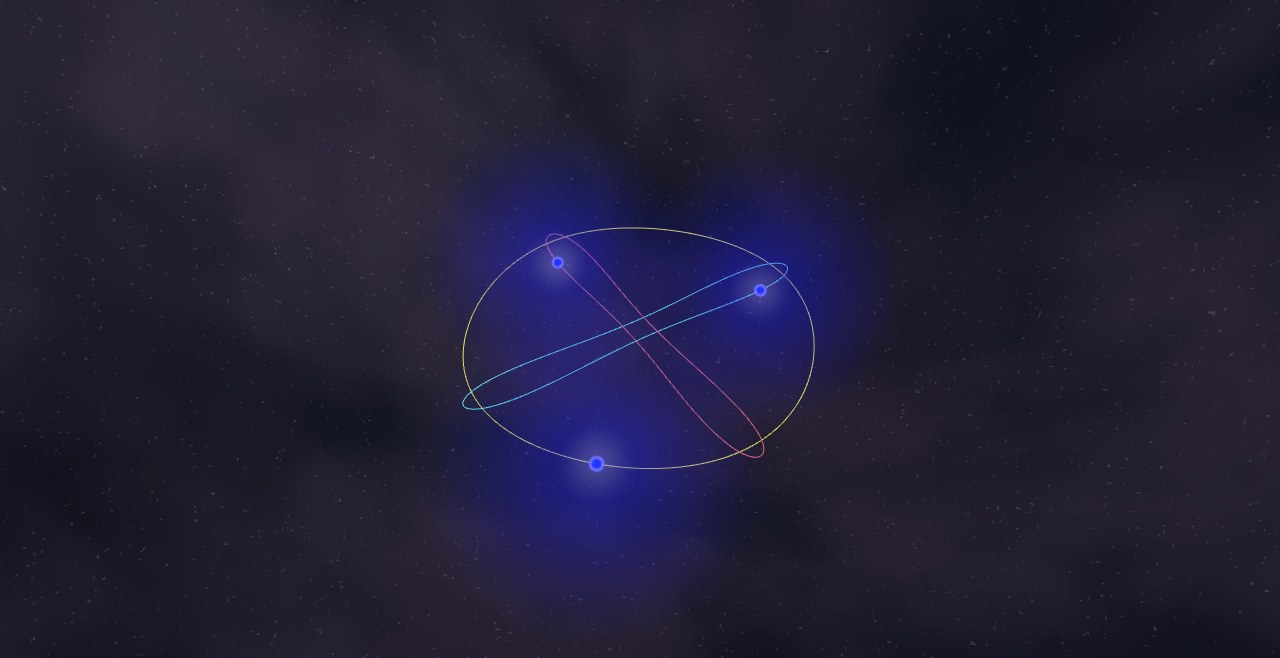
Simulate three equal masses crossing through a shared center to outline an X inside a circle. A rare, repeating n-body gravitational choreography solved by Newtonian physics.