When Galaxies Collide
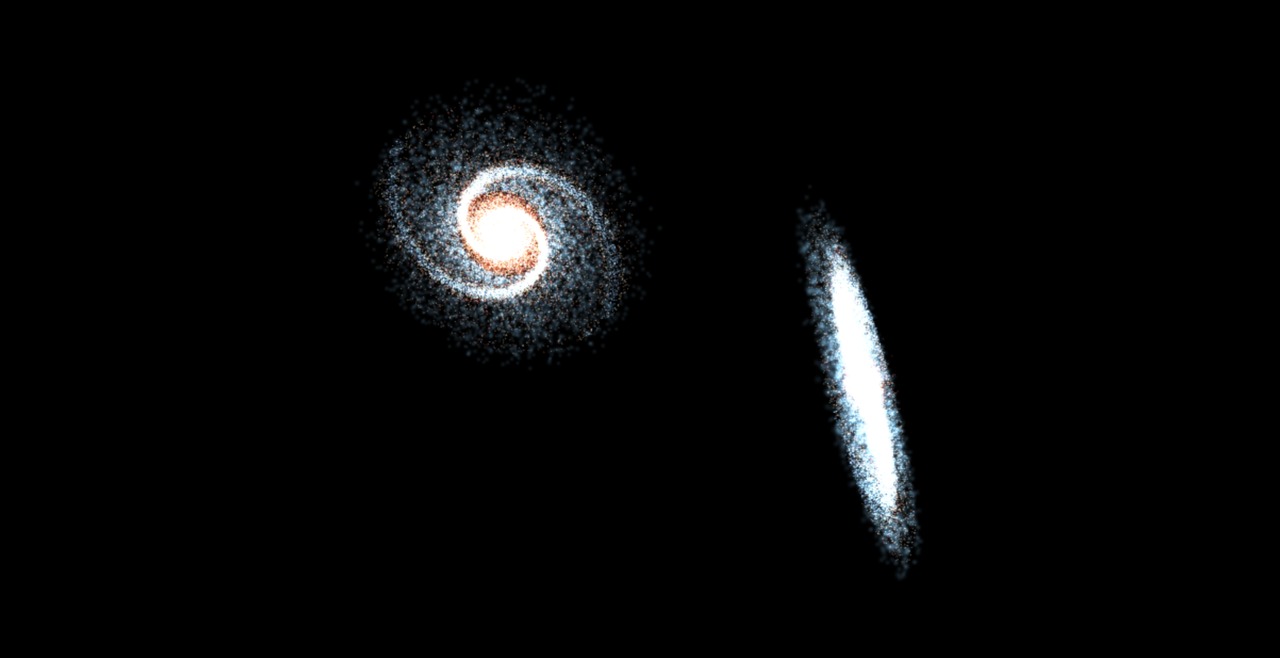
Two spiral galaxies on a bound, grazing approach. Tides pull bridges and tails out of their disks as they swing through each other.
Scenarios
A 3D galaxy simulator for spirals, barred spirals, lenticulars, ellipticals, shell galaxies, globular clusters, and galaxy collisions. The Milky Way appears with the Magellanic Clouds, and the Local Group brings in Andromeda, Triangulum, and NGC 3109. Blue marks young, hot stars in the spiral arms; red, orange, and gold mark the older bulge, disk, and cluster populations. When galaxies collide, their disks shear into tidal bridges and tails.
Two spiral galaxies on a bound, grazing approach. Tides pull bridges and tails out of their disks as they swing through each other.
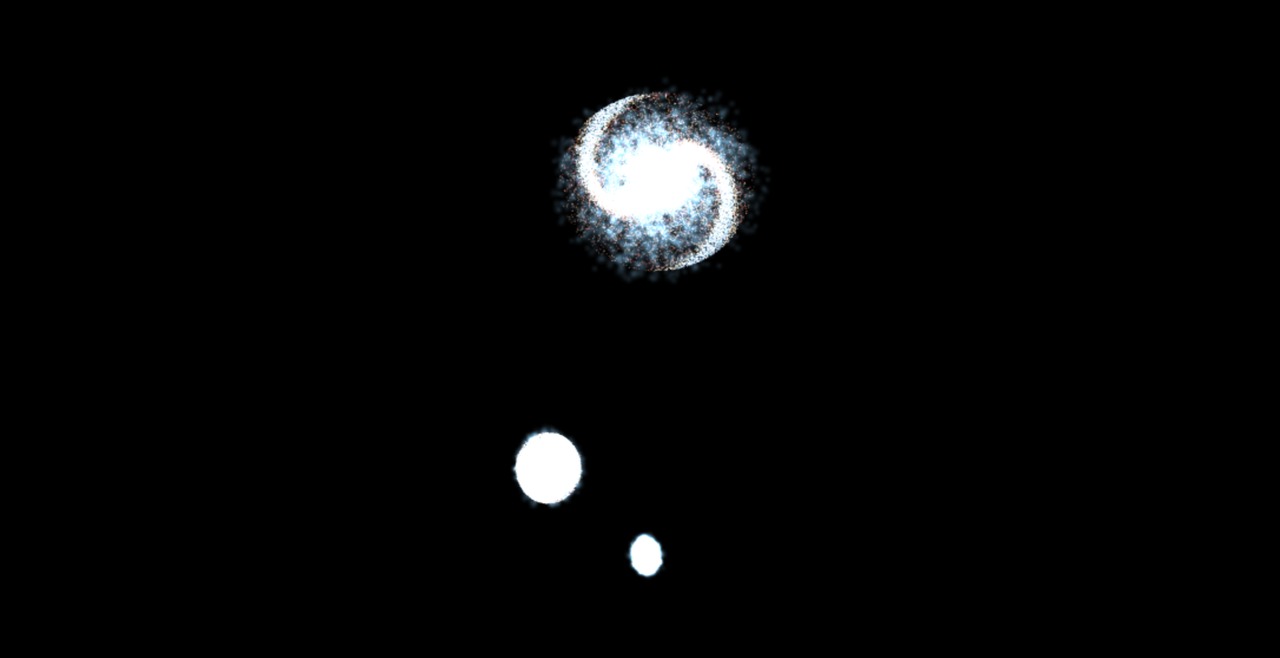
The Milky Way with the Large and Small Magellanic Clouds. The Large Cloud is a barred dwarf about 50 kiloparsecs out; the Small Cloud is a looser disk a little farther off, and the two travel together.
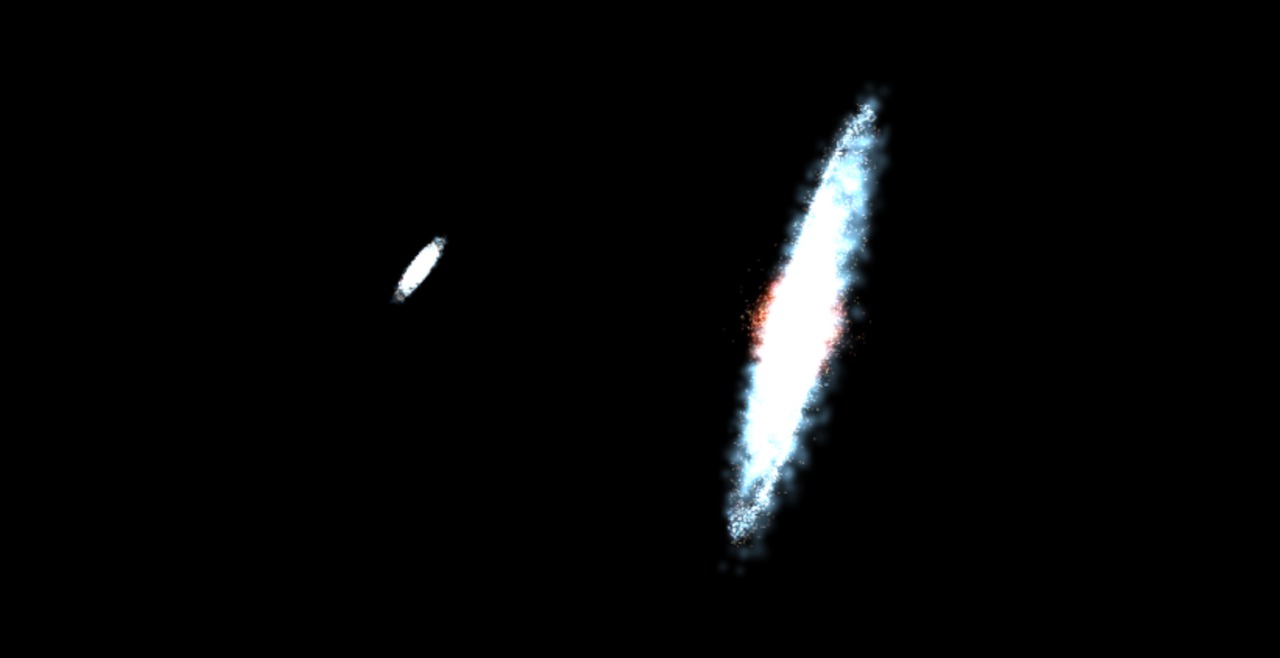
The Milky Way and the Magellanic Clouds, with Andromeda, Triangulum, and NGC 3109. Andromeda is closing on the Milky Way. NGC 3109 sits on the far side of the group.
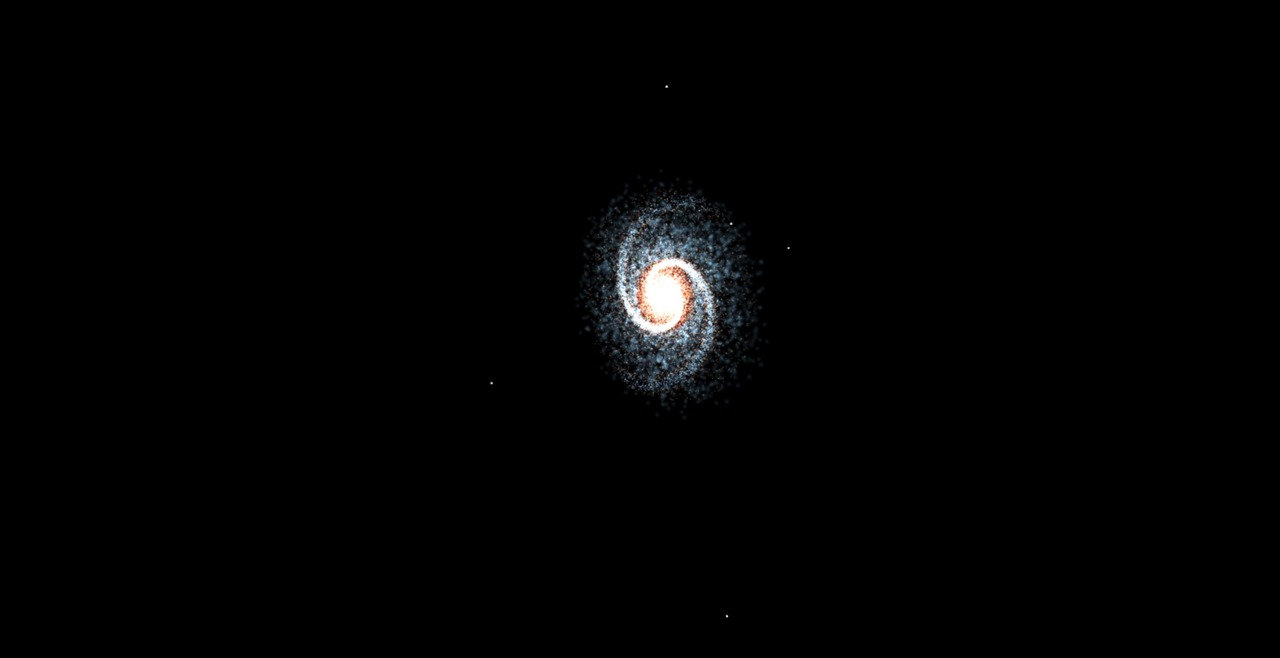
A large spiral galaxy with five globular clusters on wide halo orbits. Blue stars trace the arms; the clusters are compact red swarms.
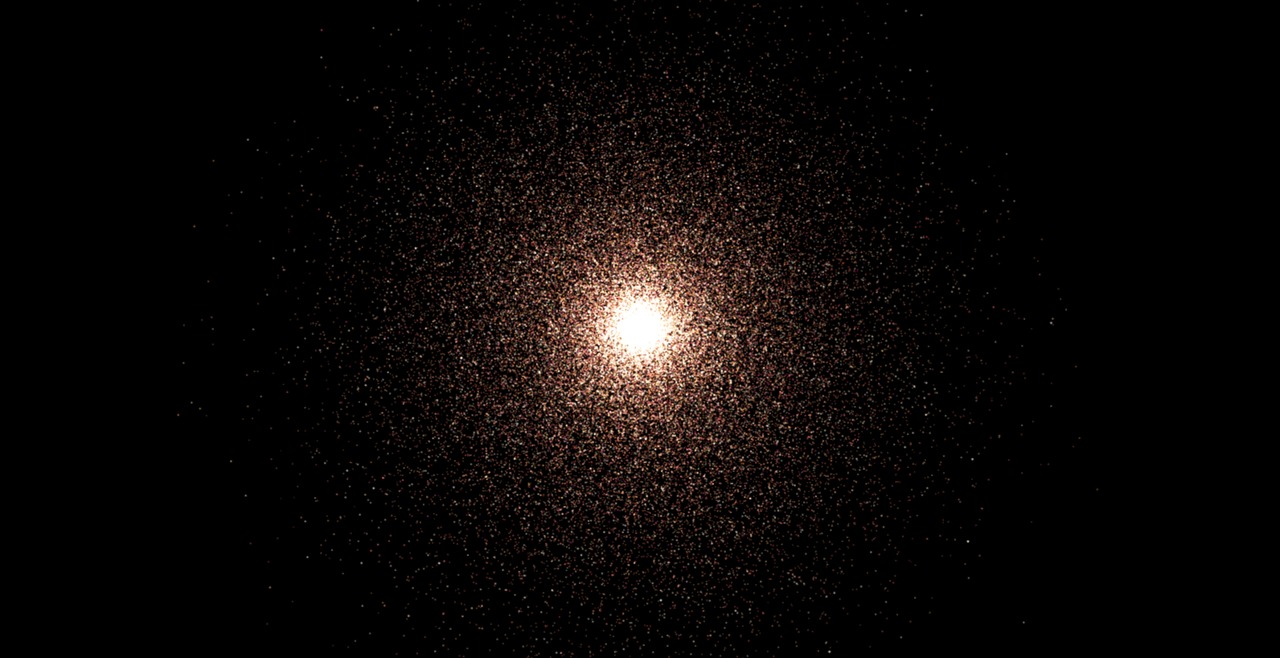
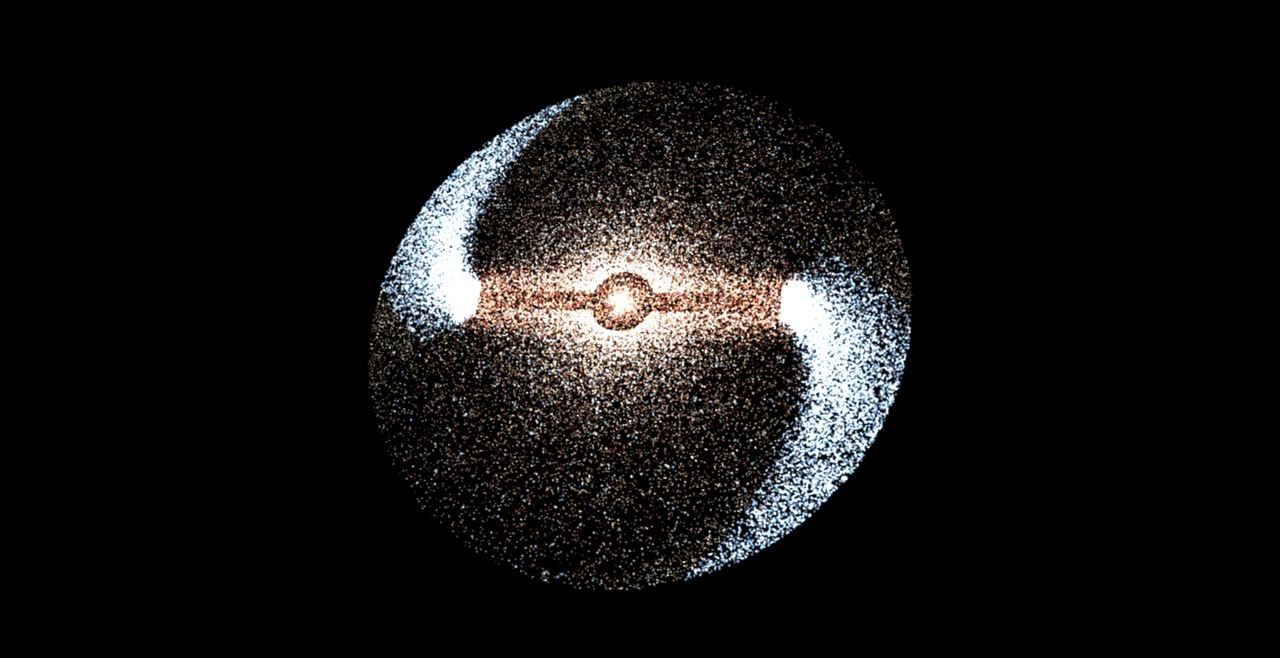
A smooth red stellar spheroid. The stars follow random bound orbits, with no disk and no spiral arms.
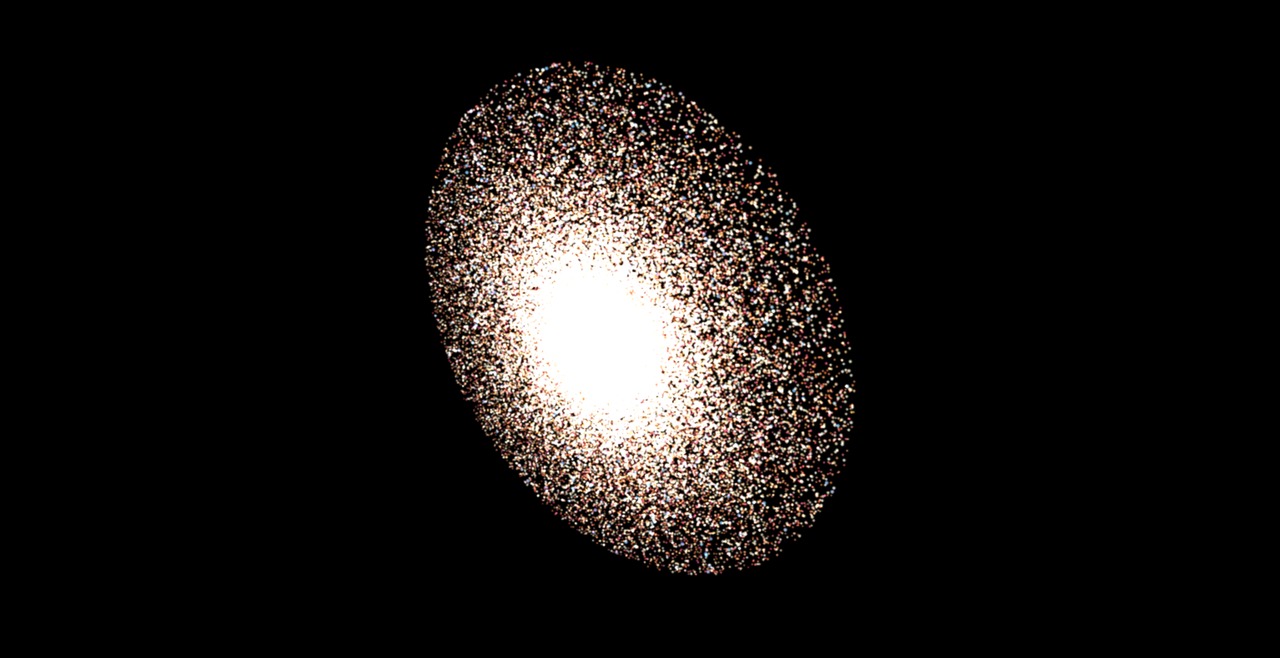
An S0 galaxy: a thin yellow disk and a large red bulge, with no spiral arms.
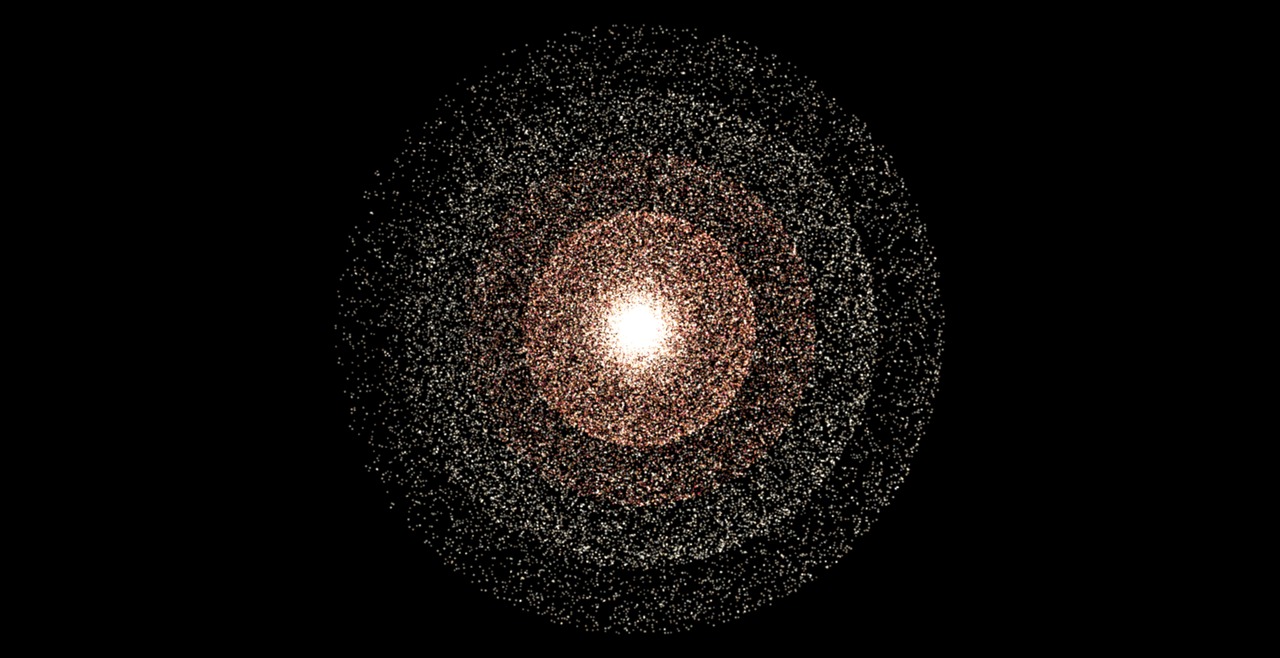
An elliptical galaxy wrapped in stellar shells, the sharp ripples left by a merger.
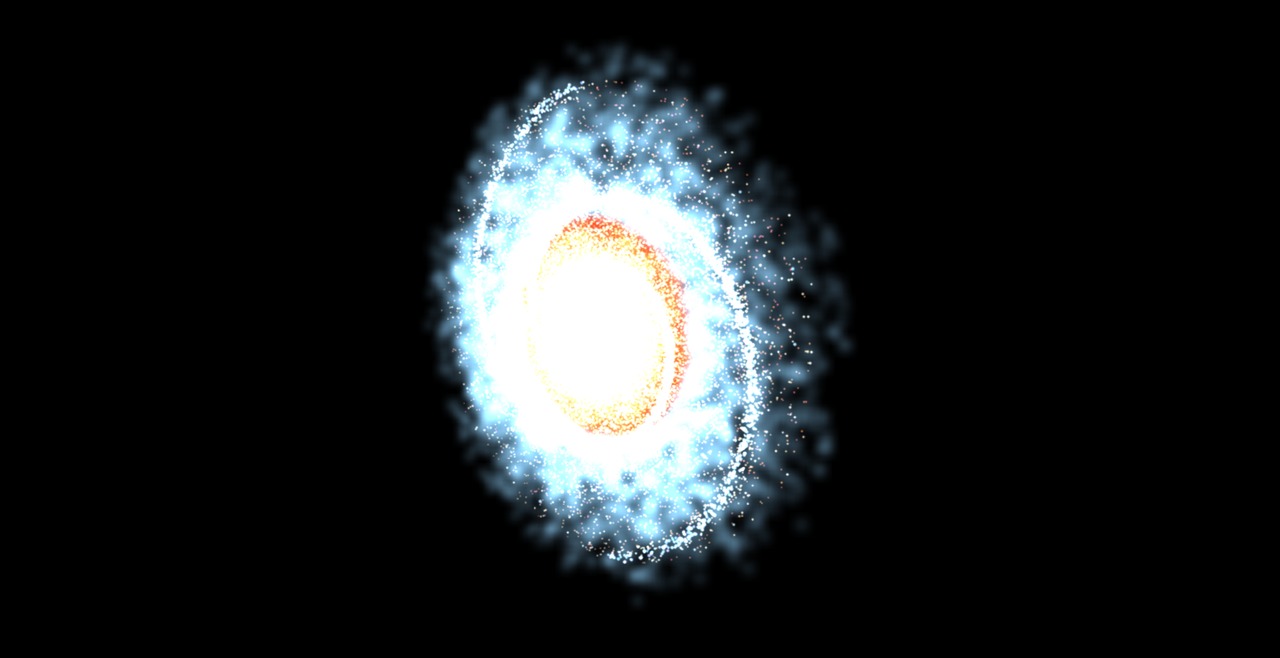
A tightly wound Sa spiral. A large red bulge dominates, and narrow blue arms lie close to the disk.
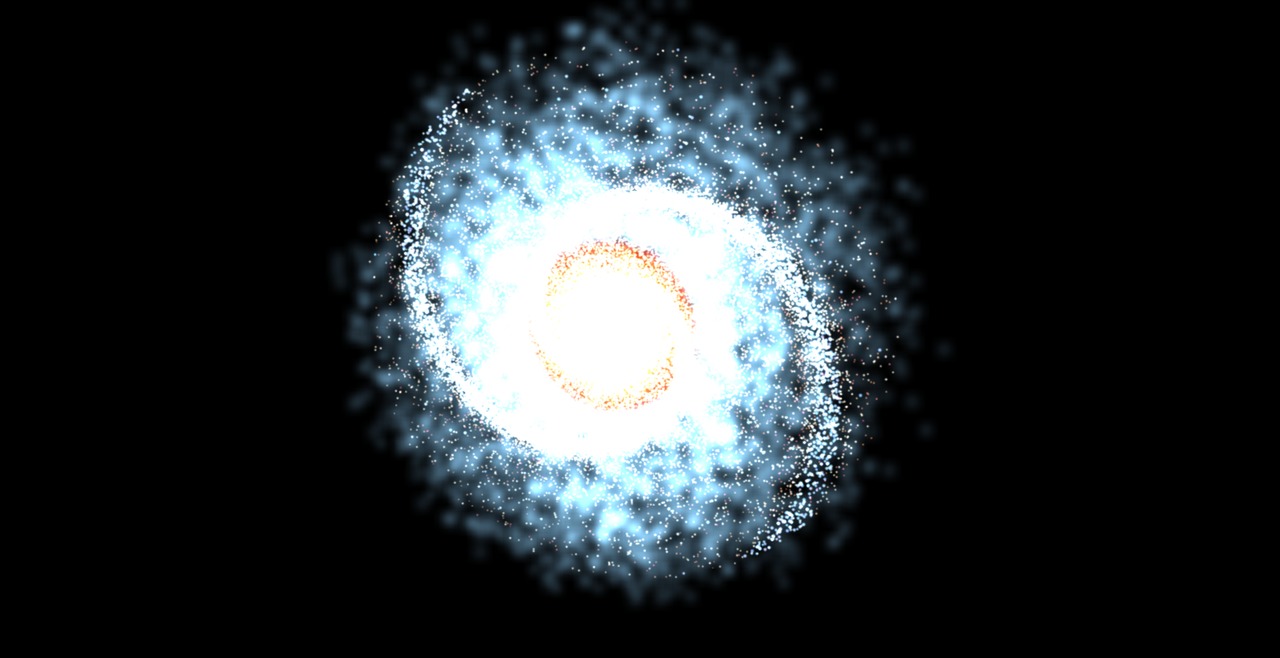
An Sb spiral with a moderate bulge, broader arms, and both young blue stars and an older yellow disk.
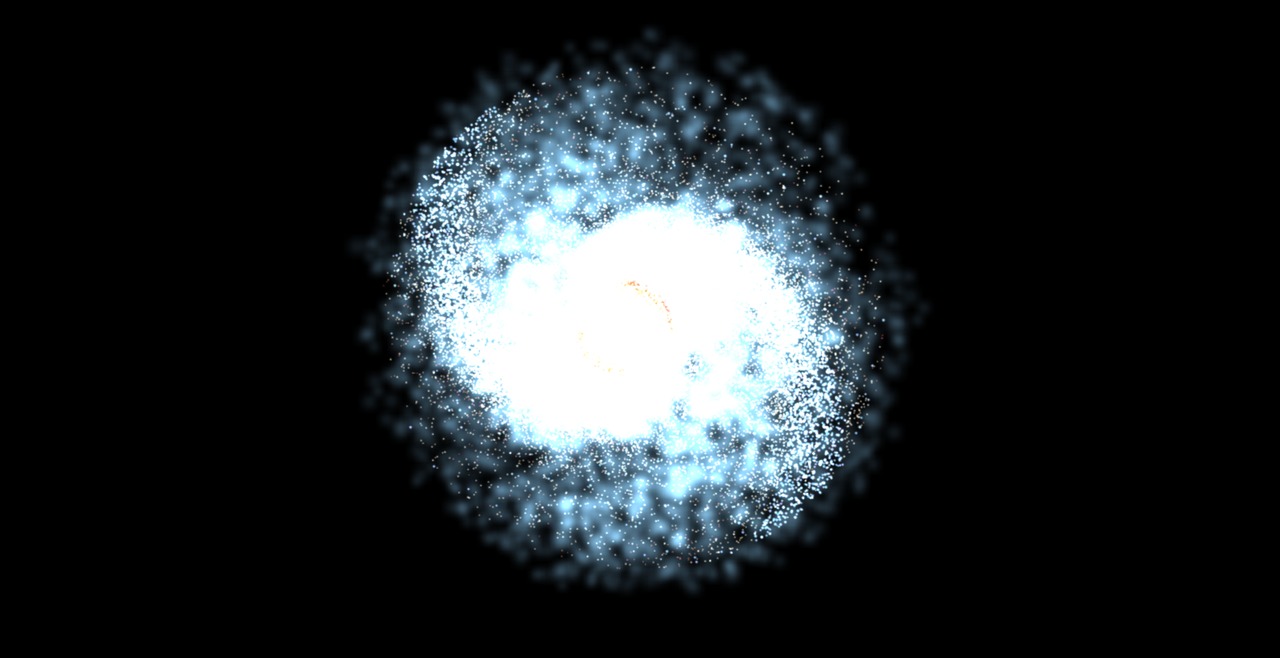
An open Sc spiral. The bulge is small, the arms are loose, and most of the blue light sits in the arms.
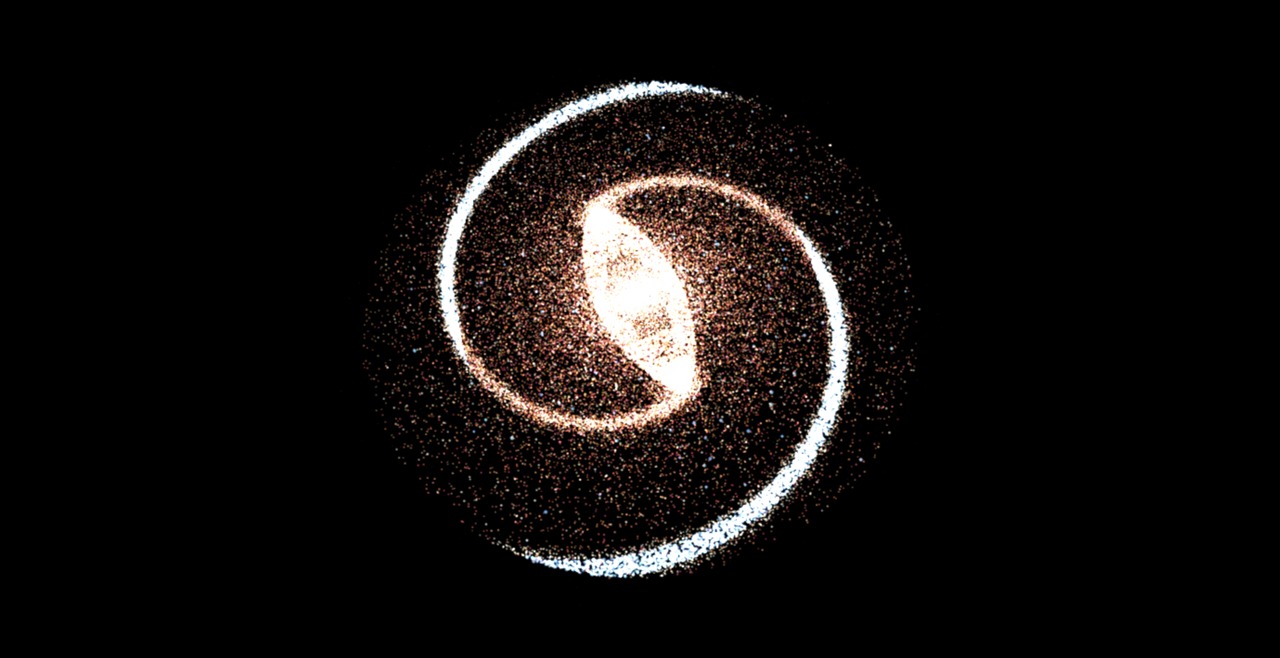
A barred Sa. An oval lens of old stars sits inside tightly wound arms.
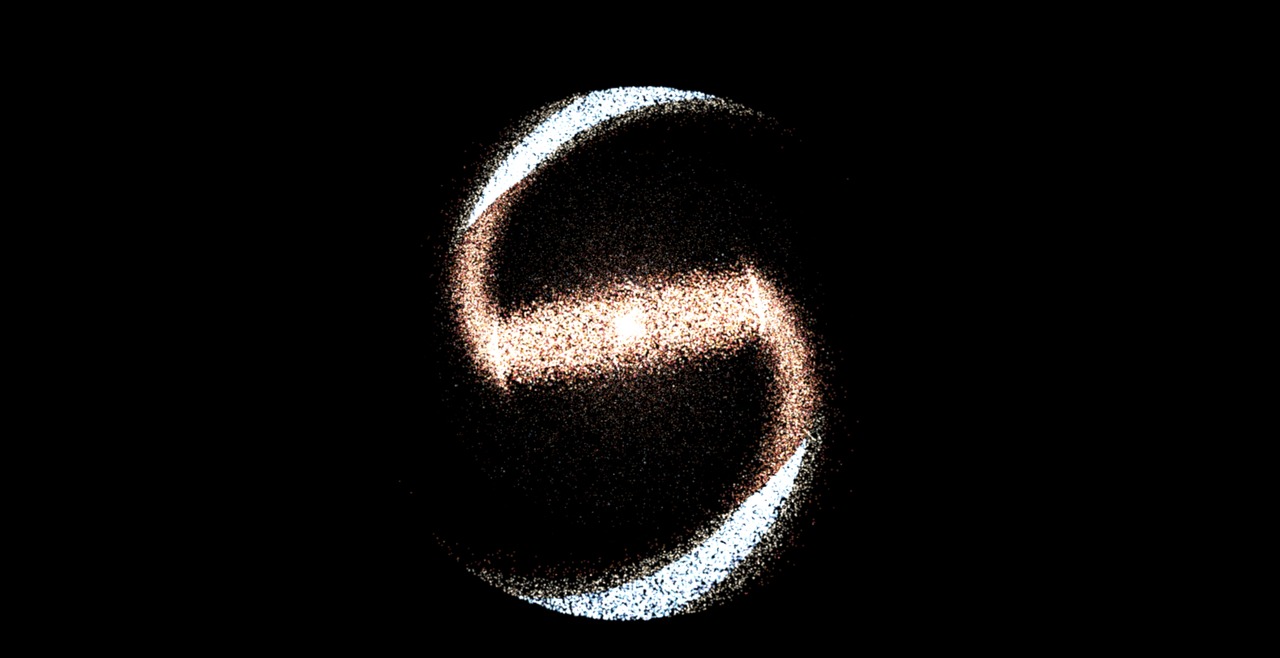
A barred Sb. A straight bar of old stars, with two arms leaving its ends.