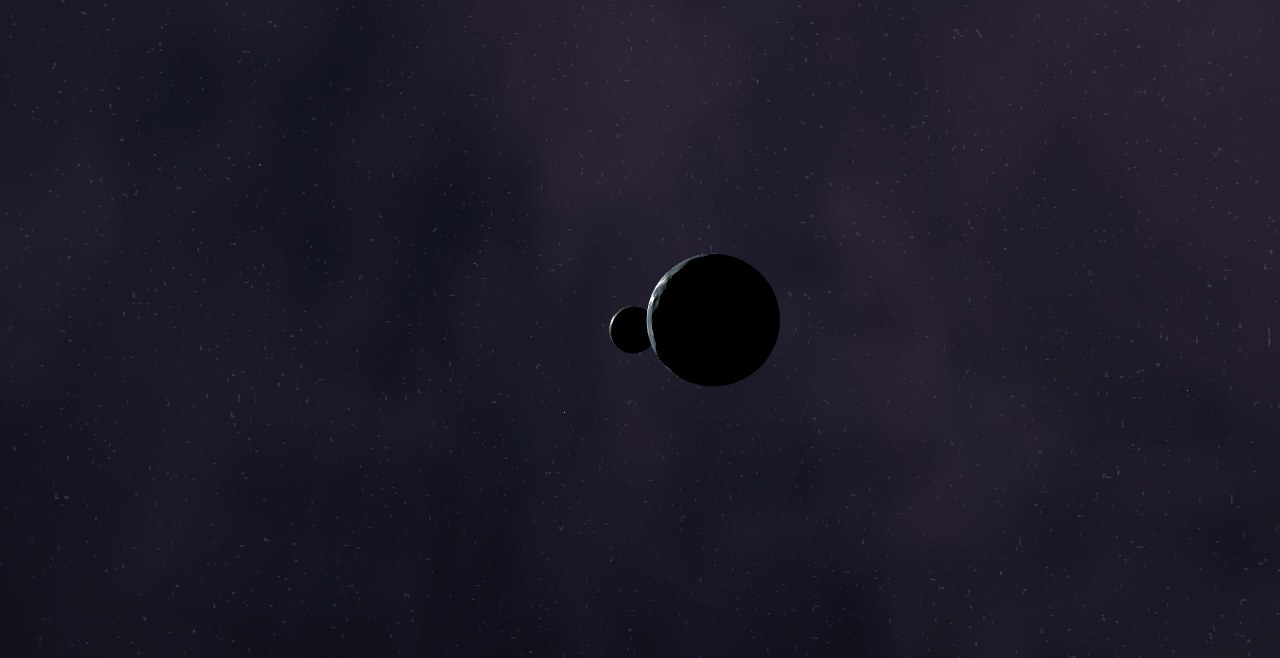
Eris and Dysnomia
Journey 68 AU from the Sun to explore dwarf planet Eris and its moon Dysnomia. Trace the 37,000 km orbit that revealed Eris's immense mass in the distant scattered disc.
Solar System
Command complex natural satellite networks under pure gravitational physics. Run simulations of Jupiter's resonant Galilean moons, Saturn's complex rings and icy satellites, and the Earth-Moon system.
Share
Journey 68 AU from the Sun to explore dwarf planet Eris and its moon Dysnomia. Trace the 37,000 km orbit that revealed Eris's immense mass in the distant scattered disc.
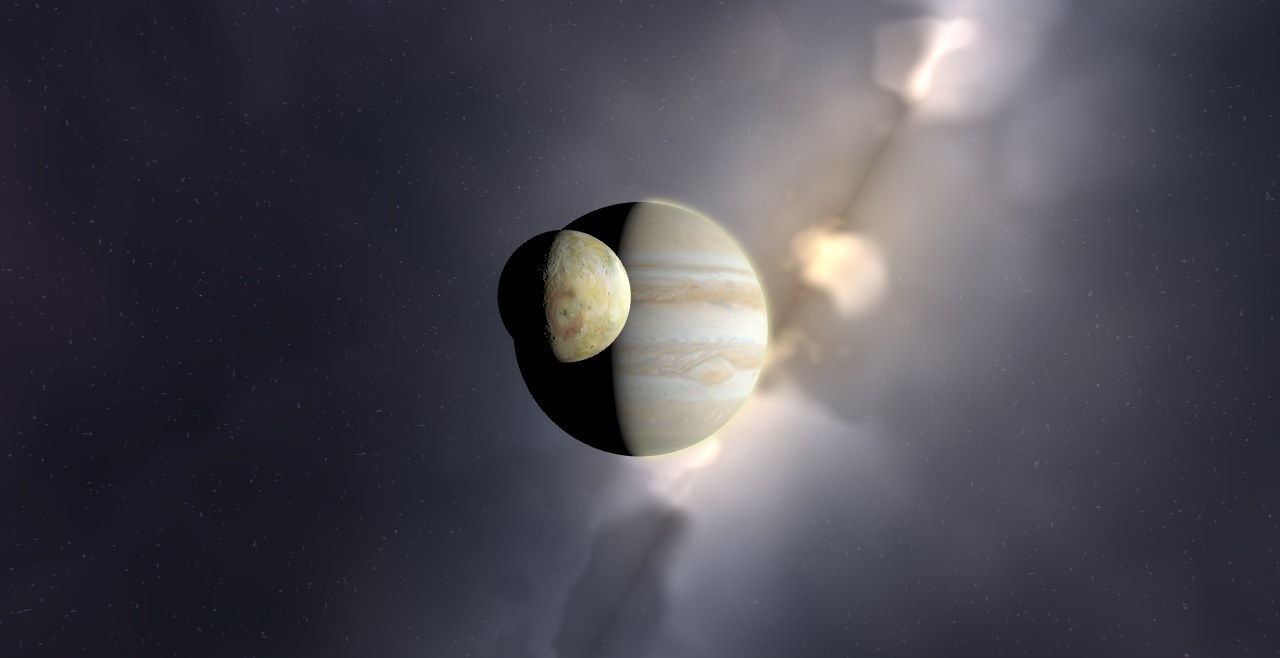
Simulate Jupiter and its four Galilean moons: Io, Europa, Ganymede, and Callisto. Watch the historic 4:2:1 Laplace orbital resonance play out in interactive Newtonian 3D.
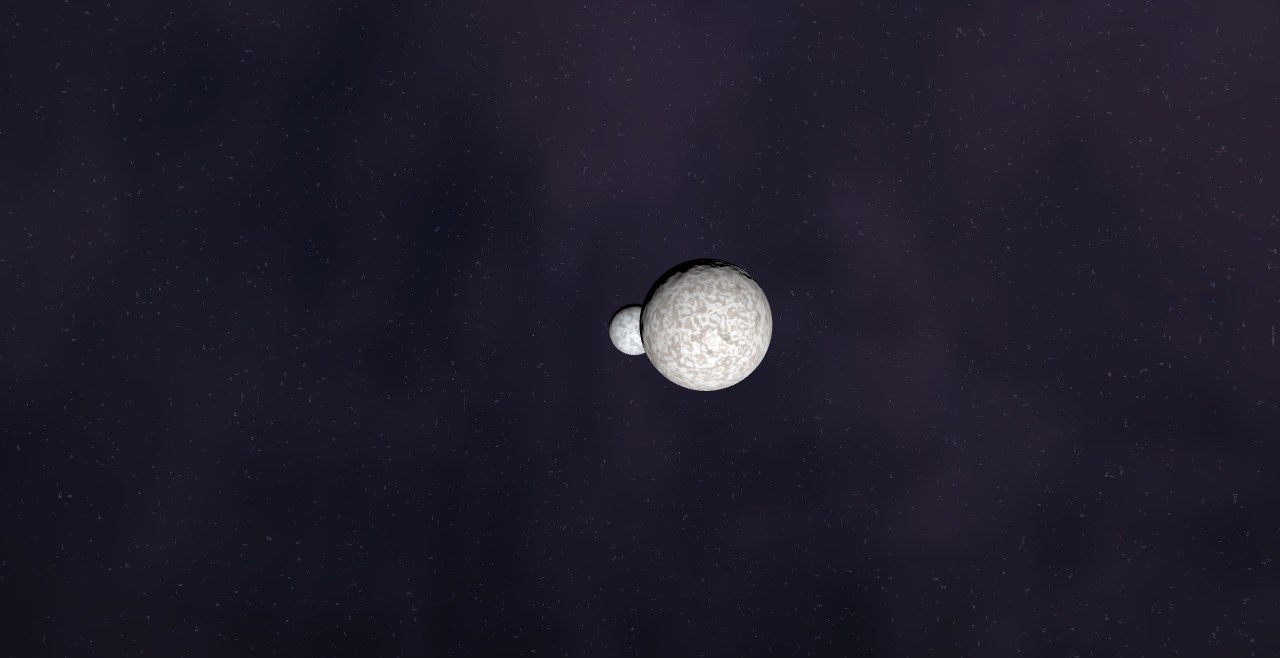
Venture into the Kuiper Belt to explore dwarf planet Makemake and its elusive moon MK2. Follow their mutual orbit 45 AU from the Sun in this accurate gravitational simulation.
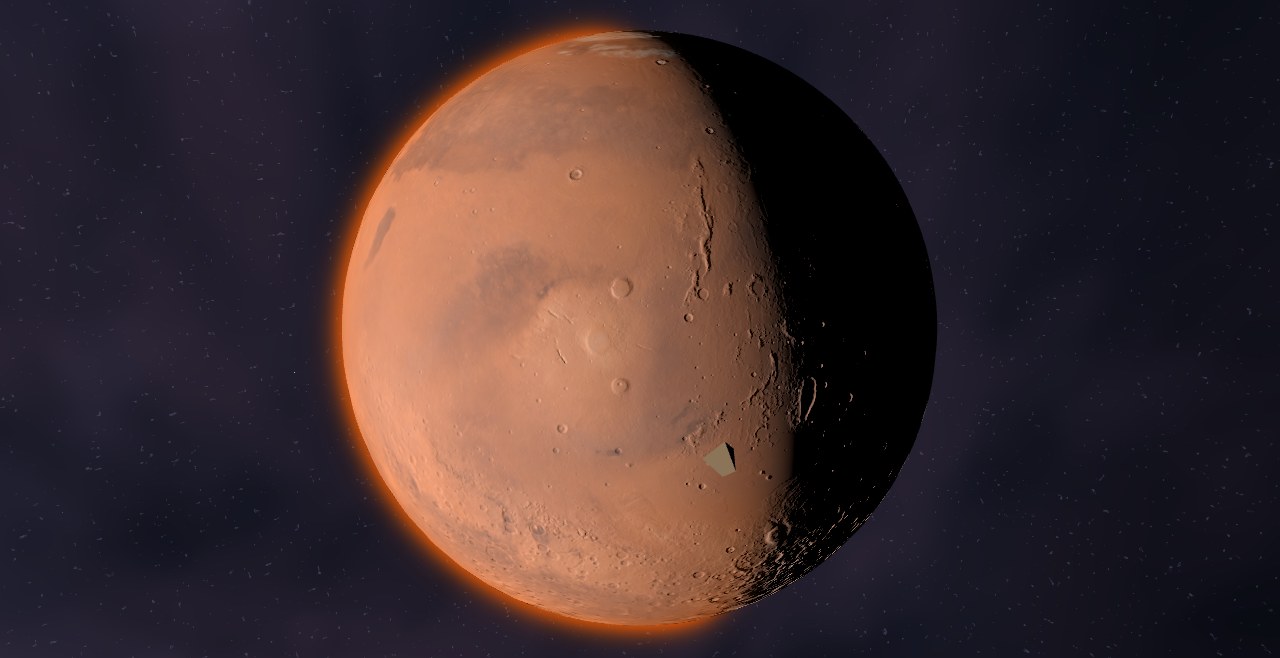
Simulate Mars and its doomed moons, Phobos and Deimos. Watch swift Phobos skim just 6,000 km above the Martian surface while outer moon Deimos traces a serene 30-hour orbit.
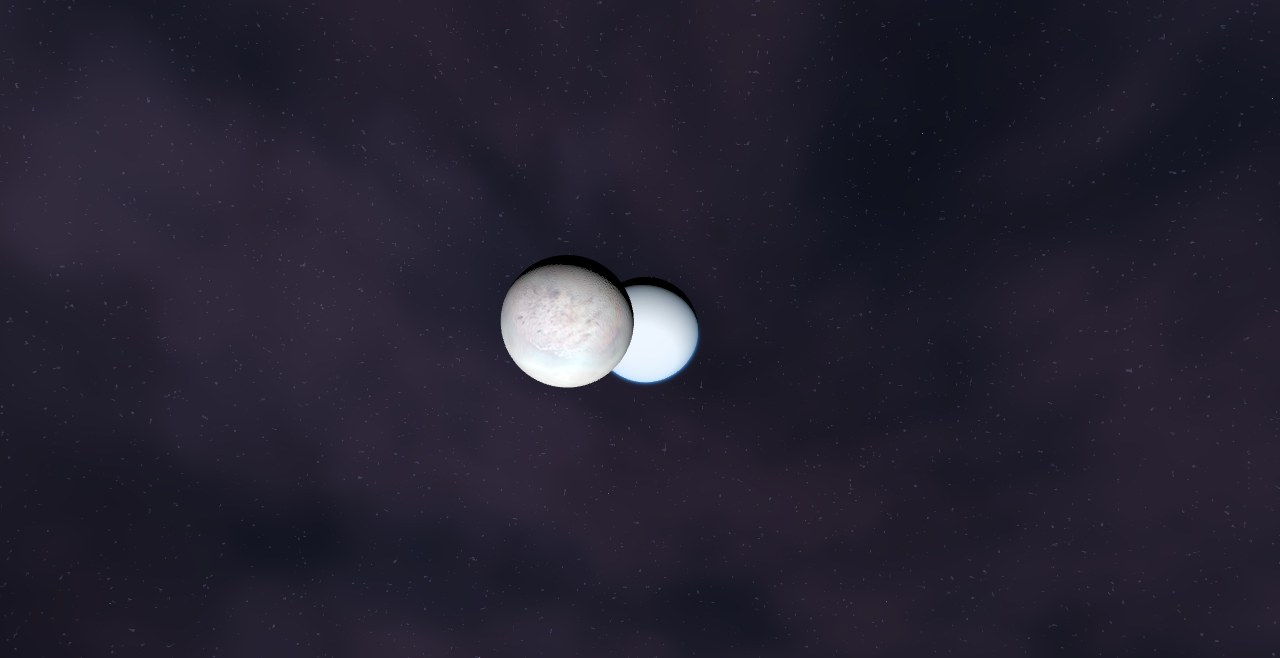
Explore Neptune's moon system, dominated by massive retrograde moon Triton. Discover the captured Kuiper Belt origins of Proteus, Larissa, and highly eccentric Nereid in 3D.
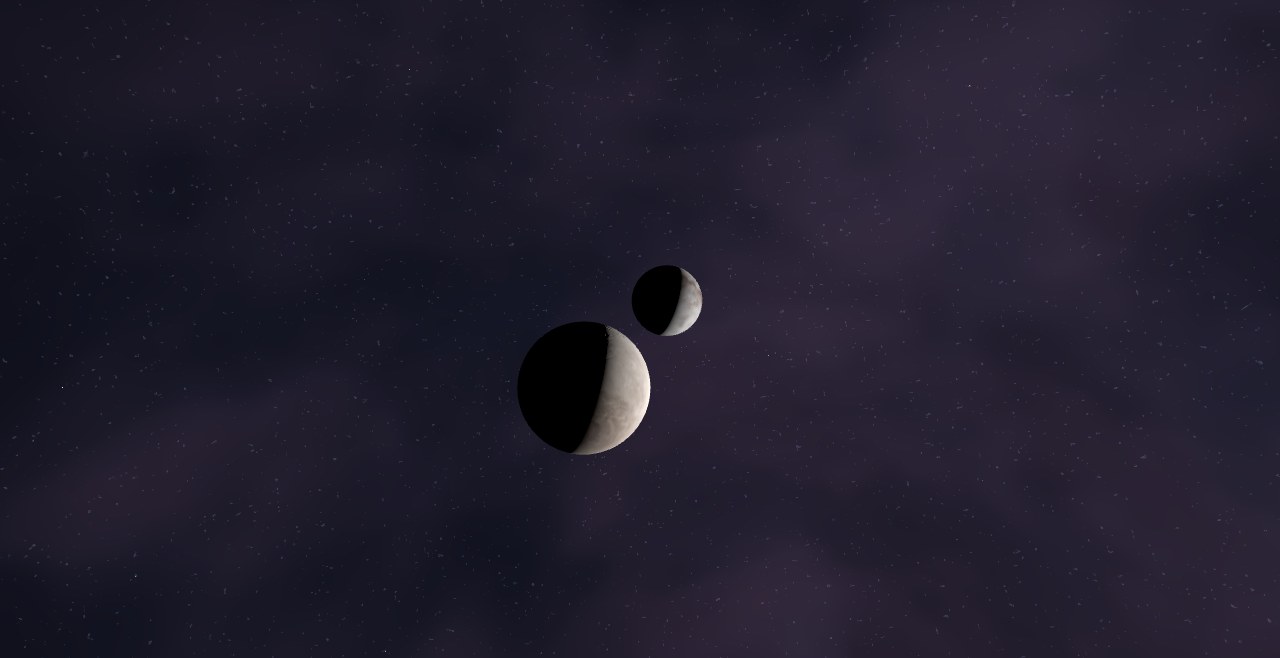
Explore Pluto and its five moons: Charon, Styx, Nix, Kerberos, and Hydra. Witness a true binary dwarf planet whose barycenter floats in open space outside Pluto itself.
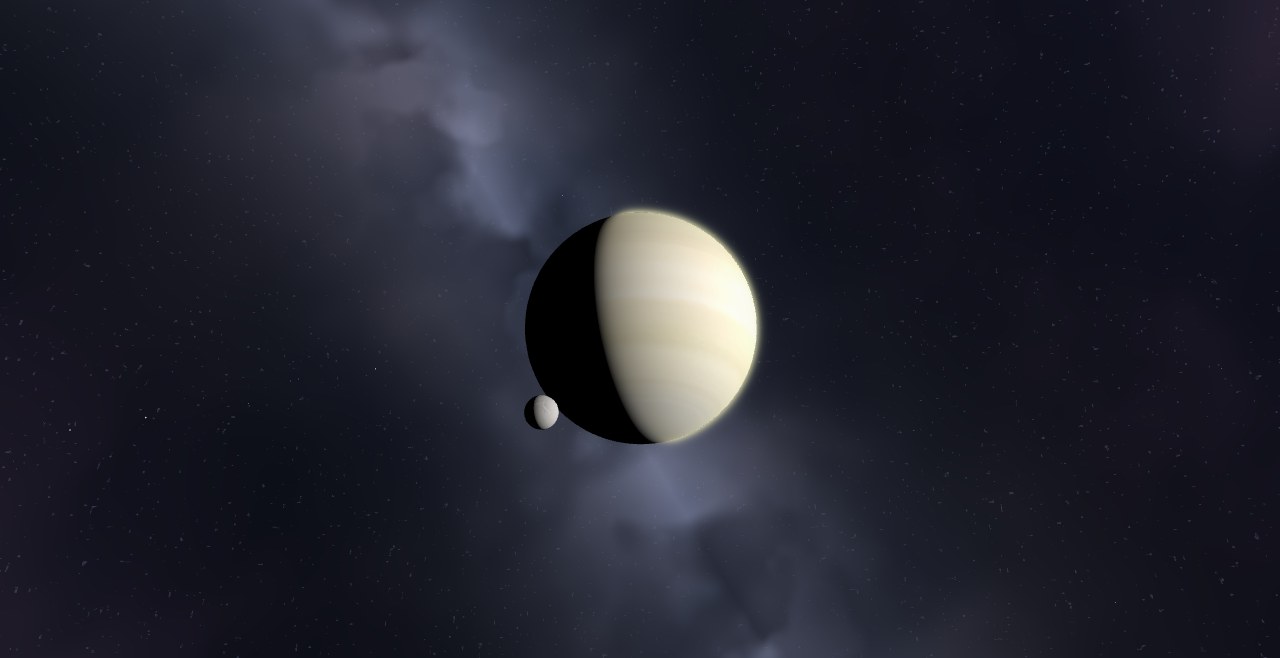
Explore Saturn, its major moons including Titan and Enceladus, and thousands of dynamic ring particles. Watch gravitational shepherd moons carve distinct gaps across the rings.
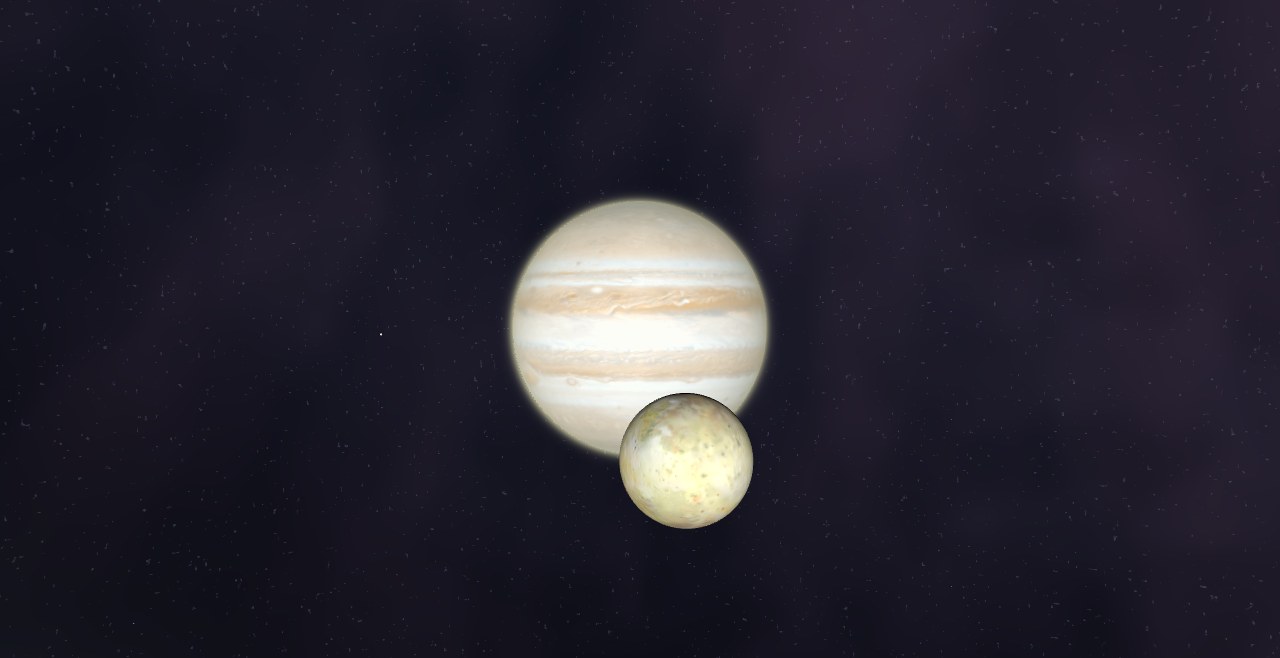
Witness Comet Shoemaker-Levy 9's historic 1994 collision with Jupiter. Track 21 fragmented icy nuclei plunging into the gas giant's atmosphere at 60 km/s in realistic 3D.
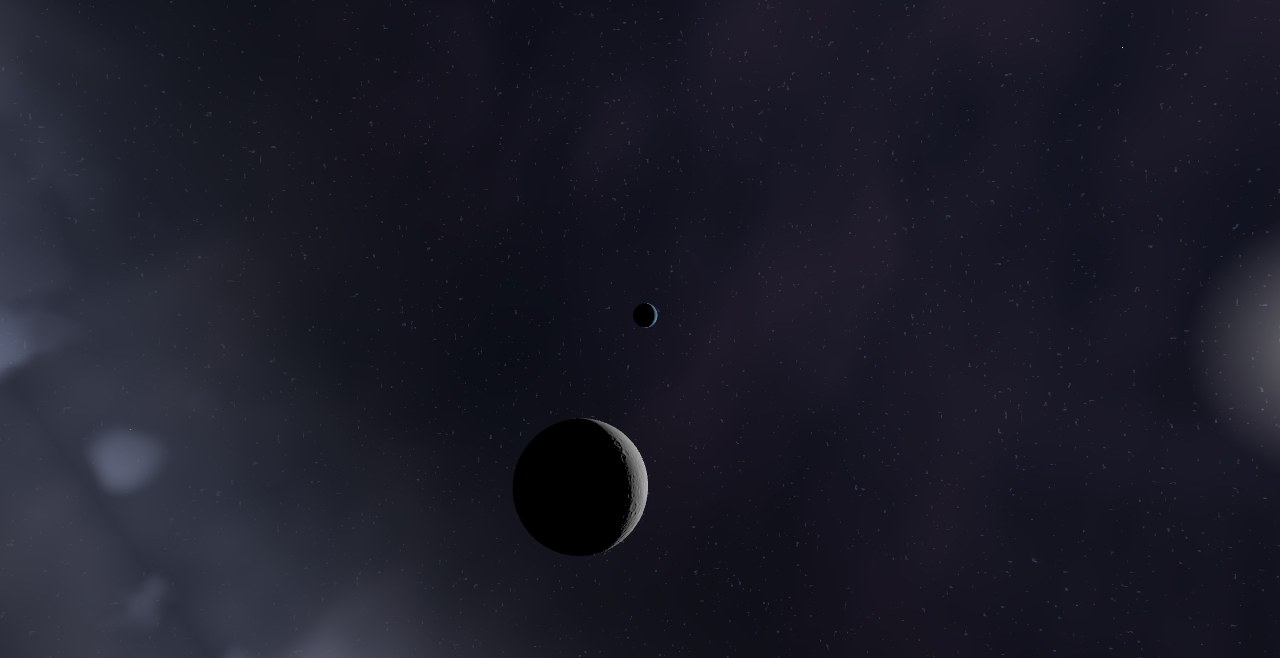
Explore the Earth-Moon system in precise Newtonian 3D. Watch our tidally locked Moon orbit at 384,400 km while solar gravitational perturbations subtly modulate its orbital path.
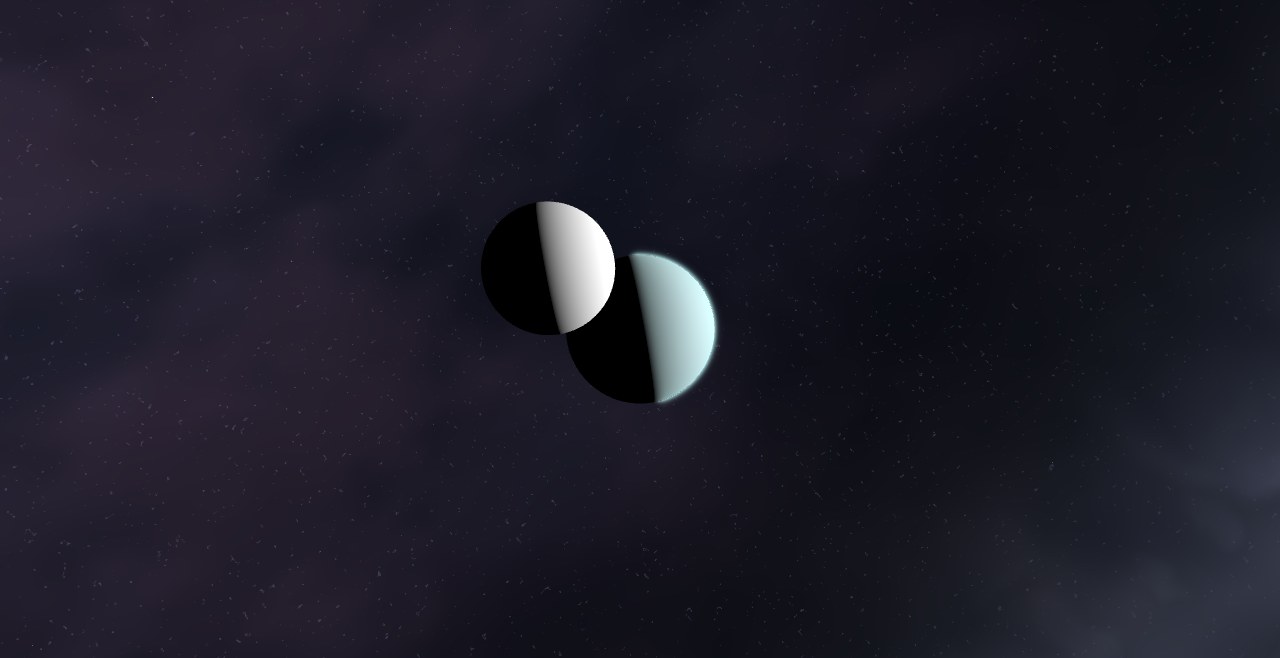
Explore Uranus and its ring-moon system, tilted 98 degrees on its side. Watch Miranda, Ariel, Titania, Oberon, and shepherd moons orbit in the planet's extreme equatorial plane.